Showing posts with label 2-star. Show all posts

Sunday, June 30, 2013

Review: The Concubine by Jade Lee ★★

The ConcubineI feel like I've been reading this book forrrreeeeevvvveeeerrrrr. It's short. On my Nook it was less than 200 pages. But I just really could not work up any interest in the romance aspect of this book. I just find romances, at least those I've read (which is admittedly few) to be predictable in the worst way. I knew from the moment I learned who the dude in the palanquin was what would happen - it was just a matter of the details. I probably would have known before then if I'd read the book description... but I don't read those, usually.

Anyway. I actually thought that the Chinese political situation and process of finding an empress were the most interesting parts of the story, and I wish that these aspects comprised a bigger portion of the book. For all Ji Yue's abilities in observation and "being a political wife" - the political stuff was extremely limited. Saves room for talk of "jade stalks" and "dragon organs" I guess. You know, the important stuff. (Psst... Those are euphemisms for "penis".) *wink*

I also was bothered by the whole OMG-it's-so-amazing deflowering scene. These girls have guarded their virginity like their lives depended on it (which, I guess, in a way, was the case), haven't even SEEN a penis, let alone know what to do with it, and then Ji Yue, after having learned to give a blowie just the day before... "sits" on Bo Tao's Dragon rod or whatever like it ain't no thang. No pain, not even discomfort, and she just goes to town. I mean, it just rubs me the wrong way (geddit?) when fiction portrays the first time as this wonderful, amazing experience, especially for the girl. It's not. It is not a rainbow sunshine daisy unicorn experience. Usually it's painful, then uncomfortable, then messy, and then it's just over. And then there's the second time, which isn't much better. It takes time and repetition and practice to get to the OMGYES sex. It don't just happen when that hymen breaks.

Anyway. This was OK. Predictable, cliche, unintentionally humorous at times, but nothing special. I wish the history and politics were fleshed out more, as well as the characters' personalities. Their euphemistic sexy times parts were fleshed out quite enough.

Thursday, April 4, 2013

Review: Good Luck Bear by Greg Foley ★★

Another disappointing children's book. I'm beginning to wonder: Are books for children more about the pictures than the story?

Let's consider:
This book is about a bear who randomly comes across a three-leaf clover one day. His friend, Mouse, says "Hey, I heard that if you find one with FOUR leaves, you'll be lucky!" So, Bear goes in search of a four-leafer. He encounters a couple other unhelpful anthropomorphs: A monkey who says they don't exist, a turtle who says it'll take forever to find one if they do, an elephant who says he found one once, but doesn't remember where, a gopher who wonders aloud whether Bear will be unlucky if he never finds one...

And then Bear gives up.

But never fear! Mouse has stuck through the search with him, and while Mouse didn't find what Bear was looking for, exactly, he found something better: a FIVE leaf clover. I'm extrapolating here in the assumption that was in fact better, because that is literally the end of the story.

So, the moral to this story is that if you give up on something, someone will just... give it to you.

The artwork again is the saving grace for this one. It was adorably cute. Story? Not so much.


Wednesday, April 3, 2013

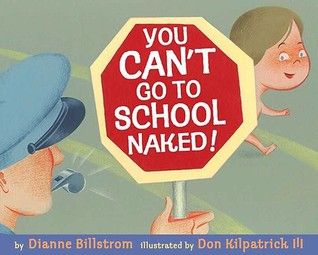
Review: You Can't Go To School Naked by Dianne Billstrom ★★

I've set myself a goal of reading 150 books this year. I am not even close to being on target. I'm like 12 books behind.

It's quite sad, really.

So, when I remembered WeGiveBooks.org, I was like "Oooh! I can feel as though I've accomplished something almost like reading!" AND, even better, I have done something to tip the Karmic scales a little more toward the positive, since my spending 5 minutes to read this book has resulted in a book being donated to the Overbrook School for the Blind, in Philadelphia.

I picked this book almost at random. I am not much of a children's book reader, to be honest. I don't have kids, so I don't really have much reason to, other than to do a good deed. I have come across some cute ones, though, really enjoyable books with fantastic artwork and a really fun reading experience.

Unfortunately, this one wasn't one of those.

I think it tried to be, but my first, and lingering, thought as I read this was that it reminded me of Dr. Seuss's rhyming structure. The first few lines in the book were:
"I must wear clothes? That's what you say?
I don't LIKE clothes! I say -- NO WAY!"

Sounds like Green Eggs & Ham, doesn't it?

So the actual story is about a couple parents telling their little boy about all these horrible things that could happen if he went to school in ze buff. He could get dirty, or sunburned, he could freeze, he could get slime all over him in Show & Tell when he has to hold the frogs and snails, he wouldn't have any pockets for cool things that little boys pick up off the ground, etc.

But the whole time I was reading this, (I mean, when I wasn't also repeating "I do not like them, Sam I Am") I was thinking:  "That's not really a good way to get a little boy to want to wear clothes. Boys like to get dirty, they like gross things, they don't really care about sunburns or cold as long as they are having fun. These things sound like Little Boy Adventures, not 'consequences'."

In the end, spoiler alert, the little boy doesn't go to school naked, because his parents traumatized him with all of their dire warnings of awful consequences of doing so.

Me, I'd have just said, "If you go to school naked, all the little boys and girls will be able to see your noodle, and they won't want to play with you!  *cough* ...Until they're older anyway.

*distraction technique, engage!*
Cookie? "

I'm gonna be a great mom. :D

Anyway, it was OK, if a little wishfully idealistic. The drawings were cute, but I think the story could have been better.

Sunday, June 3, 2012

Review: Tastes Like Human by The Shark Guys ★★

Tastes Like Human: The Shark Guys' Book of Bitingly Funny Lists2.5 Stars
I really wanted to love this book. Really I did. When I received the email asking me to review it, I thought it sounded hilarious, and pretty much jumped on that. I love clever, irreverent humor, and I was really excited to read this book - but it just didn't deliver enough for me, sadly, and I've got pretty mixed feelings about it.

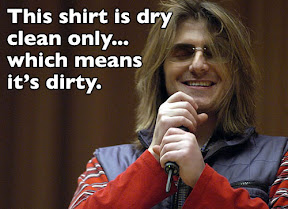
This book contains some great examples of witty observations and wordplay, non sequiturs, and paraprosdokians -- fans of Mitch Hedberg will know this last one. For those who aren't, let me explain: It's the kind of joke where the back half of a sentence or phrase is an unexpected punchline for the beginning half. Such as: "I haven't slept for ten days, because that would be too long." or "I ordered a club sandwich. And I'm not even a member!" Your brain has to kind of work in reverse to see the joke. Great stuff. I love it. One such in this book was this one, from "Top 13 Fighting Tips": "8. Never Hit a Guy with Glasses; use full bottles instead." It made me chuckle, and I like that.


Chuckling is good, but I was expecting "bitingly funny" humor that would keep me giggling for the duration, and in that I was disappointed. This ebook is only 144 pages long. I can read that easily in one day after work, but this book took me 3 days to finish, and the last bit was something of an endurance test - it felt like it was trying too hard to live up to that "bitingly funny" title, with irreverence that should be funny but towards the end here was just over the top and edged on being silly (Example: all of the "Top 20 First Date Suggestions"). In and around the funnies I've mentioned before, there was just too much that didn't do it for me. List entries that left me wondering what the point was in including them, how it related to the topic at hand, how the sub-title for the list item related to the list item, etc. There were some which would have benefited quite a bit from just another line or so of detail or backstory... or relevance.

Two examples:
First, from "Top 8 Great Achievements in Sitting", number 7 is "Giving a Sit For Charity":
"Most people change seats after making quick judgment calls - should I get up for this elderly person who might not really be all that old but has just let himself go, or do I really want to wake up to a face like that should I decide to doze off on the bus.
Briton Terry Twining made the mundane marvelous when he changed seats 40,040 times in 48 hours at a soccer stadium in Belgium. It should be said that the stadium was completely empty - free from lager-swilling hooligans who'd likely not take kindly to those making the mundane marvelous in the middle of a game, so points off for deception. (Daily Telegraph, December 2008)
Wake up to a face like what? Do they mean they don't want the first thing they see when they wake up to be the see a face of an elderly person? I'm not sure what they are trying to say here...?
But my main question is: How exactly does charity fit in here? Was this guy seat-hopping for charity or were they just going for a clever list title pun? I wouldn't have ever thought anything about charity except for the title. I'd likely have thought he was trying to set a Guinness World Record (and "Giving A Sit For Guinness" would have worked just as well), or was really, really bored that weekend. But since charity WAS mentioned, and this is "Great Achievements in Sitting" - where's the relevance to the charity? Did he raise $1 for every seat his ass touched and donate it to cancer research, or anything? I don't feel like seat-swapping 40,000 times is much of an "achievement" unless there WAS a point to it. Maybe if he was doing it to call awareness to the true horror of hemorrhoids for sitters everywhere I'd see the relevance, the achievement, but as it is, I'm just left feeling like "Hoookay then..."
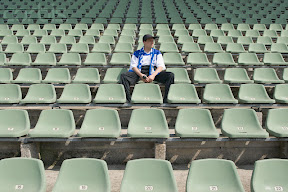

...19,999... 20,000! Only 20,040 more to go... Why was I doing this again?

Second, from "Top 5 Out of Control College Parties", number 5 is "Operation Storm the Dorm":
"Return to your freshmen dorm" seems like a terrible theme for a seniors' party. Why would anybody need to revisit such recent history, especially when the rashes from irregularly washed bedding have yet to fully disappear? Presumably the only benefit is that you would now be a senior and could lord over freshmen the minor achievement of having satisfied minimum academic requirements for three years as you attempt to cajole them into your old bed.
Regardless, that was the theme for a soiree at Bates College in Maine, recently found to be the most expensive non-profit college in the US, a year there costing more than someone earning a liberal arts degree would earn in five years of intensive interning. Parents forking out that kind of cake would probably not be thrilled to see the apples of their eyes bruised in a brawl with police. But that's what happened when police tussled with some 200 "return to your dorm" partiers, pepper-spraying several who the officers said refused to get out of the way of an incoming ambulance.
With his elbow on ice and face rearranged according to the preferences of law enforcement, one of the protesters called the cops' use of force "absurdly excessive". While we would be inclined to believe exactly that in most cases, one policeman did have his leg broken in the melee. (No word if it was his opening night.) (Associated Press, May 2010; WMTW-TV, May 2010)
Now, this list is about out of control college parties. But this entry doesn't actually say what the party was or why it was out of control. They hypothesize about the theme of the party, but that sounds more like a hazing scene from Dazed and Confused than an actual party. I just wanted a little more. Rather than just compiling newsclips, I was hoping for that extra step - get in touch with someone who was there and find out what the party was about and how it got wild enough to need riot police. That's what I want to know if you're going to tell me about "out of control parties", not just the outcome like it's filler on the 10pm news. Make it interesting enough so that any of the wild people reading your book will say "Pish tosh! They call that a party? Amateurs. Lemme show 'em how it's done! Jeeves, ready Party Cave." (Or, you know, whatever they named their party planning lair.)

Moving on, I want to talk about the readability. On the whole, the book was easy to read and interesting, but occasionally -- not all the time, or even most of the time, but frequently enough to allow for quite a few highlights on my nook -- I'd run into a sentence or passage that just didn't make sense to me. I'd read it again, and on one specific occasion I read the line a total of five times, even sharing it with friends to see if I was missing something. I tried coming back to it later - sometimes that helps if I just can't wrap my brain around something, but I'm still baffled by it. The sentence is the first one in the "6 Creative Drug Smuggling Operations" introduction paragraph. For clarity, I'll quote the entire paragraph:
Drug traffickers can no longer rely only on backpackers looking to turn a quick buck for a shower back home to get their products to market. While the domestic auto industry can stamp its feet and plead for government bailouts every time foreign competition threatens its innovation-free way of doing business, drug traffickers are forced to deal directly with increasingly sophisticated police methods of detection and stiffer penalties in countries that serve as transit points.
Second sentence, a little long, but that's OK. I got that one. But that first one... It's like it's two sentences in one or something. Or if it was trying to be funny, like throwing a little dig in there at backpackers for being dirty, broke, or stranded in a foreign country, or all of the above, I think it missed the mark, at least with my test subjects friends and I. It's the "for a shower back home" that grinds the sentence to a halt for me. Take that out, and "Drug traffickers can no longer rely only on backpackers looking to turn a quick buck to get their products to market." makes sense.

This example is the most baffling one, for me, but there were others where multiple hyphenated words and long sentences contributed to that feeling I mentioned before of just trying too hard, and not always hitting the mark. Often less is more with humor.

So, overall, this book was just OK for me. Would I recommend it? Yes. Everyone's sense of humor is different, and what may not have worked for me might be exactly someone else's style. I do think that it would benefit from another edit run-through to clean up some of the long sentences and make things more concise, but that's just my preference. Not terrible, but I think my expectations let me down a bit here.

Friday, February 24, 2012

Friday Flashback Review: Where She Went (If I Stay #2) ★★

Where She Went (If I Stay, #2)Friday Flashback is hosted by Jen @ The Introverted Reader.

Originally Reviewed: March 6, 2011

I loved "If I Stay". LOVED IT. It was one of those books that made my heart and soul ache. It moved me and surprised me and lingered... So much so that I kept mentally comparing the way I felt reading the two books, and I admit to being a bit disappointed by this follow-up.

This is Adam's story. I loved Adam in "If I Stay". He was this incredibly supportive and sensitive and wonderful guy who loved a girl so much that he would do anything for her, who accepted and honored her for being the unique and oddball opposite to him, rather than wanting her to be something she wasn't, who loved her family so much that their deaths were as painful to him as his own family's deaths would be. I liked Adam so much, that I didn't even talk about him in my "If I Stay" review, because nothing would have really done justice to how perfect I thought he was. I don't mean literally perfect, he had flaws, but just perfect in the situations he was in.

Unfortunately, I barely even liked Adam in "Where She Went". I get that Mia leaving him left him heartbroken. I get that. Even taking into account the unusual aspect of the end of their relationship (meaning him supporting her through the accident and the recovery), I just find being heartbroken, anxiety-ridden, depressed and self-destructive for 3 years (with no end in sight) a bit... tiresome. That's longer than they were even together. And yet, after three years, a meteoric musical career, fame and fortune and success, all Adam can do is blame Mia for walking out on him and leaving him cold, and take that bitterness and anger out on others.

I don't mean to sound insensitive. I know that many, many people will find just this thing I found so tiresome to be rather romantic. We all want to be the center of someone's world. Someone's soul mate. I understand what she meant to him, and what their potential meant to him. But with every outburst and cynical thought, I just got more and more tired of it.

I also missed the music that was so much a part of what brought "If I Stay" to life. I know that there was a lot of musical references in "Where She Went", but it wasn't the same. I have no interest in where each of Shooting Star's songs debuted on the charts, or other details of their rise. It's enough to know they made it, for me. What I missed was the way that music mattered, the way they LIVED through music, not just lived by it, or with it, if that makes sense.

All of this is not to say that I disliked the book. I didn't. I liked it, overall. Some parts quite a bit more than others. The writing is still fantastically emotive and brutal in a way. It pulls no punches and makes sure that the reader feels everything (to a fault - see above). I WAS sad and hurt for Adam's loss, and I did want him to find a measure of happiness again... and if not happiness, then closure and acceptance. It's hard to lose those we love. It's even harder to lose those we love after we've helped them through their own lost loved ones. Who's there to help pick up those kind of pieces? I grieved for him for that.

I liked the way that the story came kind of full circle, and Adam did get his closure, even though it came through finding out things that certainly hurt. I liked that he was able to understand and appreciate the decision that Mia made in leaving, even though he was shattered by it. I liked the way he found new reserves of self-respect in himself because of this revelation.

This book didn't live up to "If I Stay" for me, but it is by no means a bad book. I like themes of lasting love, and I think that many people will love this book for that reason, but I just didn't think that this one had the same heart that "If I Stay" had, and for that, I can only give it 2 stars.

View all my reviews

Thursday, February 16, 2012

Review: World Without End by Ken Follett ★★

Let me preface this review by saying that I loved Pillars of the Earth. A lot. I thought it was almost perfect, in fact, except for one minor issue that I had with the dialogue sounding too modern for the time period (an issue I had with World Without End, too). After being engrossed in that book, loving, hating, caring about the characters in it, after feeling like I was living in Kingsbridge for 900 pages, I was excited for this follow up. I wanted more, I wanted to be back in that world, experiencing life right along with the people I was reading about, the people I cared about. So I picked this audiobook up and started it.

And all was good... for a while. It didn't take me long to start feeling that something was wrong. It didn't take me long to start feeling like Follett had ripped off his own book.

Maybe if I'd had 20 years to forget the details of Pillars before reading Book World Without End, maybe I wouldn't have felt the similarities as much, and I'd have liked it more. It isn't a BAD story, but I lost patience with it really quickly and then I stuck with it far longer than I should have hoping that it would come around. I made it 80%, and by the end, I couldn't tell you what happened, because I stopped listening. It was playing in the background while I worked, and I could hear it, but it wasn't holding my attention at all.

I wanted more of Follett's Kingsbridge world, yes, but I didn't expect Pillars of the Earth: Now With New Character Names! I wanted a different story. Instead, I got a rehash of Pillars, and so I kept comparing them in my head. "Oh, There's the devious, overbearing mother-plotter..." "Here's the Lord-Who-Thinks-He's-God..." "Another brilliantly talented at a really young age master craftsman... who woulda thunk it?" and so on and so on...

Did I like the characters? Yeah. Sure. I didn't care about them nearly as much as I cared about the Pillars characters though. Did I like the story? I guess.

I did love the performance though. John Lee read this audio, and he was great. But still... I just endured this one, rather than enjoyed it, and couldn't bring myself to keep going another twelve hours to finish.

Enough is enough.

Monday, February 13, 2012

Review: The Knife of Never Letting Go by Patrick Ness ★★

The Knife of Never Letting Go (Chaos Walking, #1)I've heard so many great things about this series, and about Patrick Ness in general, that I was very excited to read this series. After reading the prequel, The New World, and his standalone novel A Monster Calls (and adoring it), I was really looking forward to this one. Unfortunately, I find myself disappointed.

Todd lives on New World, which is a relatively new (20 year old) colonization full of people from Earth. In Prentisstown, the settlement where Todd lives, there are no women, and the men hear all the other 164 mens' thoughts, called Noise, constantly. There's no escaping it. He has been taught that the Spackle released a germ that caused the deaths of all the women, and that the same germ caused the Noise, and also allowed animals to talk.

So when Todd finds a quiet patch out near the swamp, everything in his life changes and he's ushered out into the greater, supposedly empty, world with only his dog Manchee to accompany him. Of course he then begins to find out that things aren't exactly the way he'd been told.

Sounds intriguing... but it just didn't work for me...

Sunday, January 22, 2012

Review: Speak by Laurie Halse Anderson ★★

Speak2.5 Stars
This is an issue book, a book about a terrible thing, and how one person copes with it. I pretty much knew what the unspeakable thing was going in. It wasn't really hard to figure out even before I started, but I didn't feel like this book was about the "what happened", but rather that it was about the "what happens next". In a way, it worked for me, but in others it definitely did not.

I felt a little like Melinda's art teacher, wanting more life and honesty to shine through. Some parts were really good, poignant and realistic... but they were the wrong parts. The parts I wanted the most depth and honesty from were the ones dealing with what happened, with the loss of everyone Melinda could confide in, the inability to make people see her pain. I wanted those things to speak to me, and I feel like other aspects of the book were louder, more focused on. Melinda's sarcasm and wry sense of humor, even if it's just inside her head, for instance. Her observation of the social cliques and school were right on. I liked her voice, her sardonic viewpoint, but I wanted less of that and more of her coping with what happened to her. No... I take that back. I didn't want less of that, I wanted it to relate more to what she was going through. It felt like being inside ANY sarcastic highschool freshmen's head.

The "what happened" part is almost unimportant, except that it's the catalyst for this story. It's supposedly the thing that silences Melinda... but I don't really get that. I can understand her fear, but I don't feel like it changed her much otherwise, and it just seems "off" to me, somehow.

It's the little things that make me feel this way, that there's not enough contrast between "before-Melinda" and "after-Melinda". Her room not having its own Melinda personality and resonance, her routine post-it note communication with her family, her thinking about what her friends will think of a boy paying attention to her before thinking about what SHE thinks of a boy paying attention to her... It's like she has no personality of her own. So her silence doesn't have the power I wanted it to have.

I wanted her silence to speak volumes. I wanted to see the huge changes in her, the unignorable wrongness of her tongue being trapped by fear. I wanted to see all of that and more... even if it was only for my benefit and nobody else around her could see it, if that makes sense. We're the ones in Melinda's head, seeing her world through her eyes and living her life along with her. I wanted to really feel it... and what I felt was more like a very introverted girl than a victim.

When Melinda finally found her voice, I wanted more resolution. I wanted to see the repercussions, for everyone involved, and for Melinda to really find strength and use it... and I felt like that was all kind of glossed over in a "who's the outcast now?" kind of highschool way. Really? No criminal charges? No counseling? Nothing? I wanted strength and inspiration to come pouring out of the last pages of this story, but instead, the story just ends. We can extrapolate and hope that Melinda gets there, but we're technically on our own.

I had very high expectations for this book and I wanted to love it. While I enjoyed some aspects of it, the aspects that I really wanted to shine just didn't. I wanted more, I expected more, and unfortunately, I just feel like this one fell really short of what I'd hoped it would be.

View all my reviews

Tuesday, December 6, 2011

Review: The Bell Witch: An American Haunting by Brent Monahan ★★

The Bell Witch: An American Haunting2.5 stars

From the blurb: "The Bell Witch took up residence with John Bell's family in 1818. It was a cruel and noisy spirit, given to rapping and gnawing sounds before it found its voices.

With these voices and its supernatural acts, the Bell Witch tormented the Bell family. This extraordinary book recounts the only documented case in U.S. history when a spirit actually caused a man's death.

[...]this book recounts the tale with novelistic vigor and verve. It is truly chilling."


Chilling? Not so much. I just kinda expect malevolent spirits to, you know... be malevolent. Just a quirk I have. So much of this book was about how this spirit would just sit down and have conversations with people regarding what it is and where it came from and what it wanted. There was surprisingly little poltergeist chaos wreaking after the initial start. I dunno, maybe the teller thought we'd get bored with that chaos and terror, and instead wanted to tell us all the mundane stuff about it, like... how it went out of its way to prevent injury or death to some or outright save others. Or when it touched that one guy's hand that time, in order to be "liked".


I had seen the movie, and so I knew how it went. I wasn't sure whether the resolution at the end of the movie would be a Hollywood re-write or not, and so I waited it out with the book to see. And I found out my answer about an hour before the audiobook ended. I could have stopped there, but I'm glad that I kept with it until the end. It didn't improve things very much for me, but I think that there was information in the book that wasn't in the movie, about the spirit's origin and manifestation, and I found that aspect very interesting. Hence the half star addition. ;)

The audio reader was very iffy for me. In the Editor's Note at the beginning of the book, he sounded very stiff and formal, but then when he started to read the story, he fell into this kind of Southern drawl that made me sigh with contentment. Unfortunately, he didn't keep it up. Boo!

I'm not a big fan of audiobook readers who "do" the voices. I usually just want the reader to read and let the characters speak for themselves. There were parts that were very well done, Old Kate's "main" voice, & John Bell's voice were both done well. But then, during straight narration, the reader would lapse into odd accents, or stumble over his words, or pause at inconvenient times (like the middle of a word). I heard something like a Scottish accent, hints of a Spanish one, a little bit of Minnesotan, etc. Every time one of these would slip in, I'd be like...


Yeah. So, this book? Not terrible, but not very good either. That is all.

View all my reviews

Wednesday, January 19, 2011

Review: Crusade by Nancy Holder & Debbie Viguie ★★

CrusadeI received this book as part of an ARC tour from Star Book Tours. I had actually forgotten that I had requested it, and when it showed up on my doorstep, I was a little surprised. But opening it up, I can see why I would request it - it looks like it would be awesome. Dark and gritty and bloody, just like a vampire book should be.

In in many of those aspects, this book delivered wonderfully. The vampires were vicious and cruel and bloodthirsty, and there wasn't a sparkle to be seen. The fights were pretty intense, and the action was written well and was exciting. I also liked the political facets of the story, and how they corresponded with other wars from our past. History repeats itself, just with a new bad guy each time around. If these are the things that you're looking for, you will enjoy this book, and probably the series.

I was hoping for a little more, and so I admit that I am a bit disappointed with this one. I think that this book had great potential, but I think that it got lost on the way.

First, the characters didn't feel authentic to me. Almost all of them were very stereotypical and one dimensional to me, with few exceptions. Holgar was one exception. I loved his character throughout the story until the last 50 pages or so, until he seemed to change before our eyes into someone suddenly dark and secretive - most likely a lead-in to the next book in the series. The same with Father Juan. We're supposed to ask: Who are they really?

The rest of the characters didn't do much for me. Jenn was at her most interesting when she was on her own. With the others, she was bland and boring. The group dynamic quickly got on my nerves with all of the in-fighting and I kept thinking that they would be better off if they went their separate ways and each had a book to follow their adventures alone. Maybe then we'd get to see more of their character and the focus would help them to come alive. I doubt that will happen though.

Then there is the writing itself, which was inconsistent. I know that the edition I read was an uncorrected edition, so I'm not talking about the grammatical errors or spelling errors, but the writing itself. For example, in the midst of running for her life from a pack of vampires who want nothing more than to kill her, and trying to rescue her sister from still more vampires, we have this:

"The sun was setting; she could feel it as surely as she felt the pounding of her own heart.
The heart that beat for Antonio."

It then goes on to talk about how afraid she was that she would never see him or her sister again. And then back to Jenn trying to save her own life so that she could try to save her sister. It just seemed incredibly out of place to insert a line about her heart beating for someone else when she is literally running for her life. I know that in times of stress and fear, we think about those we love, but the line itself is strange and awkward to me, like it was inserted to create a relationship link to him.

Not to mention the chapter headers that contain Jenn's diary entries. These are written in such flowery and formal language that it doesn't mesh with the self-conscious and unsure 17 year old "Just Jenn" from the rest of the story.

And then finally, my biggest issue with the book is the way that religion and faith is handled. This book could be considered a Good vs Evil story, and so it stands to reason that a certain amount of religious comparisons could be made. That isn't really my complaint, although it does get quite preachy at times.

My complaint is that in this mixed cast, we have several different religions and belief systems interacting with each other, but no matter which belief system a character lived by, they approached it in a Christian-oriented way, or otherwise acted in Christian ways that did not fit with their own beliefs. I felt like, since it seemed that it was a deliberate choice to have so many different personalities and faiths, they should have rung more true, rather than all centering around what is referred to more than once in the book as the "One True Faith".

For instance, we have a Wiccan "White Witch", who practices magicks and worships the Goddess and the moon and nature, etc. But then, in a moment of uncertainty, she considers going to a Catholic priest to give her absolution, rather than relying on her own beliefs. This is just one of the examples of this from the book, and there are quite a few. This, more than anything else, made this book less than enjoyable for me. I couldn't help but wonder: Why go to such an effort to include the variety of religions and faiths if the characters do not act according to them?

I think that if handled differently, this book could have been a very enjoyable one for me. I think that people should believe what works for them, but this just felt like the message we were supposed to take away is "You can believe whatever you like, but in the end, it's all the same thing, you'll see."

Overall, I thought that this book was OK. I think that people who are just looking for an exciting read will really enjoy it, especially those who are fans of Buffy the Vampire Slayer.

Saturday, December 18, 2010

Review: Mockingjay by Suzanne Collins ★★

I am probably one of the last people on Earth to read Mockingjay. It was one of the most highly anticipated series ending books ever. Everywhere I looked someone was talking about it - counting down the days till release. There was ARC craziness and spoiler worries and giveaways offering the book sprouted up like weeds (including one of my own!), but I just now got around to reading it myself, and I was more than a little disappointed by it.

Without further ado... My Mockingjay review.


Mockingjay (The Hunger Games, #3)I'm really torn on what to rate this book. I went back and forth between 2 and 3 stars a few times, but I ended up going with 2 stars for a variety of reasons that I hope I'll be able to convey. I don't think that it was terrible, I was disappointed and irritated by quite a lot of it.

I will try not to spoil the plot, but if you haven't read the book, read the following at your own risk:

First things first... In The Hunger Games and Catching Fire, I cared about Katniss and Gale and Peeta. They were just these kids who were unlucky enough to live in this society that puts on this horrific event every year. They were born into hard lives of hunger and uncertainty and fear and control, and then victimized and picked off annually for the entertainment of the nation. I felt like I understood Katniss in HG (Hunger Games) and CF (Catching Fire). She didn't have a choice how to live, but she did her best to make a place for herself and do what she could to survive and not become a monster. The same went for Gale and Peeta - they did what they could do and tried to be decent.

But in Mockingjay (hereafter called MJ), I didn't feel like I knew the characters at all! I know that there had been a lot of changes and a lot of hard choices and pain and all of that, but in a matter of 6 weeks from the end of the Quarter Quell that ended CF to the beginning of MJ, it's like ALL of the characters that I loved and knew had changed into cruel, angry and unrecognizable goblin versions of themselves. I was really hard pressed to find anything redeeming in any of them quite a lot of the time.

Katniss is aloof, angry, consumed by self-loathing and guilt, and just shuts down and shuts everyone out. Gale has become this cold, calculating tactician who has none of the warmth that he had before - not even when it comes to his best friend who is clearly struggling. They argue and fight all the time, even when Gale is supporting Katniss - and even during these times (because he DOES stand by her), she is horrible to him and everyone else. Selfishly acting like she's the only one to have suffered or feared anything.

And that's not even to mention Peeta. He is nothing, NOTHING, like the Peeta we knew in HG & CF. Granted, he has valid reasons (more valid than Katniss's selfish ones) for this change, but it was frustrating all the same - and even more so because of the way that Katniss reacted to him.

Again I will stress that I understand the pressure that they were all under, and the atmosphere of fear and uncertainty and impending war and all that. I understand it, and even appreciate it, but I felt like the way Collins handled it stripped Katniss, Peeta and Gale of their humanity. These are teens who have had to live through situations that most adults have never lived with - the pressure is intense. But I couldn't really care about any of that because these characters seemed so robotic and cold and unreachable. All of them. And that's incredibly disappointing to me. Even when Katniss and Gale were allowed special privileges to go hunting together as they used to, there was not really any closeness or friendship or support between them, no vulnerability. You'd think that they would rely on each other for support, but the relationship was completely one-sided, with Gale supporting Katniss and Katniss acting like the world is on her shoulders alone. I wanted her to rely on him - ANYONE - and let go a little... to not hold everything inside. To be human. But even when she did break down, it was so clinical and sterile I just couldn't care.

Buttercup the cat, who had, at best, bit parts throughout the series, evoked much more emotion from me than any of the major players. Yes... A cat. And Prim is her usual, wise-beyond-her-years, caring, bundle of goodness and strength. I loved her. She is really the only human character next to Finnick, who I came to really like in this one. He was vulnerable and human.

So, yeah. My main complaints were regarding the characters themselves. Many times they would act completely out of character, Katniss especially, and I found it frustrating.

=====================SPOILER========================
====================================================

For instance... After wallowing for the entire book and keeping a running list of all the people who have died or been hurt by her actions, Katniss votes YES to hold one last Hunger Games with the Capitol's children, so that they know how it feels. WHAT??? After going through two of them herself, trying to save as many as she could, after becoming the Mockingjay to END the regime that forces the Hunger Games on the people of Panem, she would vote yes to send more innocent kids to slaughter? That makes no sense to me at all.

====================================================
=====================END SPOILER====================

And then I have to say that the way the end was resolved didn't make sense to me. The twists, yes, they made sense and weren't unexpected. But I didn't really feel that Katniss was A) given enough information to lead her to the conclusion she came up with or B) clever or shrewd enough to get there on her own. And if she was, which again would be out of character, then why was this not conveyed? Katniss is telling this story - we get her every thought - even when all that entails is a refusal to think of something.

I wasn't disappointed by the relationship aspect - or lack thereof - in this story. Considering that I didn't really like or care about any of the characters, I wasn't exactly sitting on the edge of my seat with fingers crossed hoping for a certain outcome. It was not what I'd expected, but I was OK with it.

Regarding everything else, I thought that the dystopian themes and the events in the story (almost all of them) were good, and the pacing was great. Not everything was wrapped up how I would have liked, but it is a definite end, and for that I'm glad, because I don't see how another book in this series would be an improvement for me. I can see why some would really like this, but all in all, I was not thrilled with it.
View all my reviews

Since writing that review earlier, I've thought of more stuff that I should have included in it, like (Spoilers!) how the situation regarding Prim's death felt like it was manipulated by Collins to point at Gale being responsible, which felt like a ploy to shift all of the shippers to Peeta's team and make Katniss hate him, and subsequently Gale moving to District 2 and ending all communication with Katniss. This is so out of character for him - the guy who stood by Katniss through thick and thin and never wavered, I just can't imagine him giving up on her, or her casting him completely out of her life. (End spoilers.)

There's just so much that I felt was out of character and misrepresented. It seems silly to use that word since the story is Collins', but it feels true. It's like Mockingjay forgot who it was really about. I felt like the characters that I loved were gone, and there were angry, sullen, vicious strangers in their places. Very disappointing.

Saturday, November 27, 2010

Review: Zan-Gah - A Prehistoric Adventure by A. R. Shickman ★★

Zan-Gah:  A Prehistoric Adventure (Zan-Gah, #1)This story is about a teen in pre-historic times, and his quest to find his twin brother who disappeared over a year ago. Zan-gah is brave and proud, and sure that if he starts his adventure, he will be rewarded in finding his goal. He encounters a lot of dangers and obstacles along the way, but never gives up hope.

I wish that I could say that I loved this book as I really enjoy adventure stories, but unfortunately, I had quite a few issues that I could not ignore. Overall, I thought it was OK, but I thought the concept could have been great and I had hoped for more.

First, I felt that the writing seemed to talk down to the reader. I know that this is a children's/young adult book, but readers still want to be immersed in the story and see the events through the characters' eyes. This was a book full of events that were told rather than shown, and after just telling the reader what happened, we were then told, with italics or exclamation points, what the events or actions meant, as if the reader would not understand. Perhaps these little asides were intended to draw in the reader, but to me they felt a bit condescending and repetitive. I think that this was done more to clarify what was happening than to condescend, but I didn't feel that the reiteration was necessary. We should be able to gather from context what a particular action or scene signifies, and examine that scene in relation to our own experiences. If every event is explained, we have no need to look for any other meaning or significance to ourselves, and it's then harder to connect or identify with the character without that bond.

I felt that the characters were interesting and diverse, but I didn't really feel as though I understood any of them. I did root for everything to come out OK in the end, but I couldn't really identify with the characters regarding their lives or choices or actions. I kept being surprised by the decisions that Zan made, because they were different than the ones that I would have made in his place. In a way this is a good thing, because I do generally enjoy unpredictable characters, but I admit that it did make me feel as though I didn't know Zan at all.

The second issue I had was the language used. It felt modern and out of place with the setting. The character names are all seemingly appropriate, and certain words in the presumed language of the pre-historic people, but then we have a teenage main character using modern English words like "proficient" that obviously didn't exist then. It just stuck out and unfortunately didn't work for me. Again, I realize that this was probably done in an effort to make the story more accessible to younger readers, but it was distracting and took me out of the story.

The third issue that I had was that there was just too much I found unbelievable. There were close calls, sure, but every time there was the least amount of trouble, the characters would find an incredibly convenient way out of it with little or no effort at all. Yes, Zan-Gah is described as resourceful, but he didn't really show this quality - and when he did, it was not his resourcefulness that benefitted him, it was luck or someone else coming to his aid.

There is a theme of unity and working together and loyalty that appealed to me, however. Zan-Gah helps to facilitate between his clan and those of his neighbors. Although it was effected very easily, with little more effort than gathering the people and making a short speech, still, he enacted a change for the better, and I did like that. I also liked the fact that he did not give up hope of his brother, and went to try to save him, against all odds, and knowing that he may never return. I was proud of Zan-Gah for his bravery.

I think that this book is one that younger readers may enjoy.

Sunday, September 12, 2010

Review: Angels, Sinners and Madmen by Cate Masters ★★

Angels, Sinners & MadmenMy rating: 2 of 5 stars
Ordinarily, romance isn't a genre that I would pick up on my own, but I received an offer of a free ebook copy from Cate Masters and agreed to review this book. The premise sounded interesting to me, and I enjoy historical fiction/romance, and from the description that I read and the title, there seemed to be a certain element of danger that would make the story appealing to someone like me.

I am always willing to give genres outside my "comfort zone" a try, so I went into this one with an open mind, and a little excited, truth be told, to read something different than my usual. Unfortunately, this book did not really work for me. It had definite potential to be great, but it just seemed to fall flat.

I love characters. The characters are the key to whether the book works for me or it doesn't. For any book to engross me and make me believe in the story that is being told, I need to first believe in the characters. I need to feel as though I know them and understand them, even when they don't really understand themselves. This is especially true, I would think, in a romance, specifically one in which the characters are said to have such defined and rigid preconceived notions about life and love themselves. I wanted this story of Livvie and Sam to grab me and not let go, but in my opinion, the characters lacked the depth to make me believe in them, and by extension, to invest myself in their stories or their battle of wills.

There was a lot of background hinted at, but not very much actually conveyed, and what was conveyed was always told to the reader, not shown. Because of this, even though there technically was enough information to make an educated guess at the reason for the character's action, it didn't feel honest, it felt convenient and contrived. So much of the story was conveyed by telling rather than showing that I found it extremely hard to care about the characters. For instance, Sam is said to have been kept awake several nights by thoughts of Livvie, but other than needing coffee, there are no symptoms of exhaustion, there is no description of him lying awake thinking of her, etc. Just the brief mention that again he'd been kept awake by thoughts of her. Or another example is that he was hurt previously, and reluctant to be hurt again. Aside from his saying so, and his reluctance to commit to anything with Livvie, there isn't anything to suggest that this is the reason for his reticence. Especially not when in the beginning of the story he considers her a conquest to be had and cast away like any other, so the heartbroken Sam seems a new and convenient shift to make him more sympathetic, except that I couldn't really completely believe it. The characters did not ring true for me, so it very much hurt my enjoyment of the story.

I must also say that the story felt repetitive to me, and that the pacing was off. In a story this short (under 200 pages), repetitiveness is not good. Yet Livvie and Sam would meet, they'd flirt, they'd restrain themselves, they'd argue. Sam would work, Livvie would chat with the maid in the boarding house, Sam would drink with Liam, Livvie would lament her lack of freedom. In between these things were chapters of filler which were usually about Sam's work on a shipwreck salvage & rescue schooner. I say that this is filler not because it was uninteresting - it was actually quite interesting, honestly. The concept of rescue and salvage divers intrigued me - but because it did not move the story along, or serve any purpose that I could determine. I feel as though these scenes were supposed to show the risk and danger of this type of work, but so often there was nothing going on at all except waiting, so the men would swab the deck and chat, and the story would just come to a halt again. These scenes just stalled the story, and served as a distraction to me more than anything, because I'd be expecting and waiting for something to happen in vain.

The last point that I want to mention was the dialogue, which seemed very stiff and incongruous with the characters. Livvie is described as independent, a girl who doesn't need a man to save her, who doesn't need a husband to provide for her or "own" her. Yet when she gets into trouble, she screams, "Sam, save me." It seems unrealistic for her to choose these exact words, considering how she defines herself, especially when a piercing scream or calling "Sam!" or screaming "Help!" would suffice and feel more natural.

There was a bit of sarcastic humor sprinkled throughout the story, particularly from Sam, that I quite enjoyed. And I love the setting of the story, being a Florida-raised girl myself, but again I wish that it had been allowed to come alive and show the character the state has in abundance.

All in all, I think that this book had great potential, and a great premise, but needed a lot more characterization to flesh it out and make the characters come to life, and a bit of editing to make sure that the story flowed without unnecessary stops and starts.

View all my reviews

Sunday, July 25, 2010

Review: I Am Number Four by Pittacus Lore ★ ★

I Am Number Four (Lorien Legacies, #1)
My rating: 2 of 5 stars
I received this book from Star Book Tours (YA ARC tour blog) for review, and I was super excited to read it because I'd heard a lot of buzz and it seemed like it would be right up my alley - aliens taking refuge on Earth and being hunted one by one... Sounds interesting right? I thought so.

Unfortunately, it fell a little flat for me, and was a bit too predictable.

Essentially, the story line is thus: Lorien (which is another thing that drew me to this book, although it's a blatant rip from Tolkien's Lothlorien) is one of 18 life sustaining planets in the universe. There, life developed and thrived millions of years ago, developing technologies and the like, similarly to how Earthlings are doing today. The people of Lorien nearly destroyed their planet (again, shades of Earth) and changed their ways for a more enviro-friendly and light footprint to sustain the world that sustains them. In return for this consideration, the Loric people are given/develop gifts (Legacies) to use to protect the planet.
That is until the Mogadorians show up. These dudes are just bad, greedy, ruthless, and mean. They killed their planet, and so they now want Lorien, and they wage a war to take it. Things go badly, Lorien loses, Mogadore (which recalls another Tolkien land, Mordor) gains an outpost, so to speak. But 9 children, and their guardians, are shipped off planet to bide their time and return when they can fight to regain and save their home.

Now, the question in my mind is this: If an entire planet full of adult and fully trained Legacies, who have come into their powers and abilities and know how to use them, cannot stop the invasion, how are nine kids supposed to? Well, of course in the true hero-quest, our hero, Number Four will be the most special of them all. Perhaps even a prophecy will come to light later saying so.

I did enjoy the story, I don't want to imply that it was horrible - it was a quick read that is exciting and fun. But it wasn't unique, there was far too much convenience and providence to be completely believable, and it was juvenile in all the ways that matter, although it felt like it was trying hard not to be. The writing was clipped and choppy with incomplete sentences and description that left a lot to be desired in some areas, and provided almost too much detail in other areas.  Maybe this inconsistency will be cleaned up in the final edit, but maybe not. I didn't feel like all of it was unintentional.

Moving on to the romance aspect, I stopped counting the number of times that I rolled my eyes about halfway through. First of all, the girl, Sarah, is "the most beautiful girl in town", and probably the nicest, and most understanding and the most generous and empathetic and compassionate and... most perfect. Too perfect. She has NO flaws. Zero. Unless you count the fact that she, as a cheerleader, used to date the Bully Football Star, and formed a bit of a dependence. But don't worry, that's all water under the bridge because after a summer away, she found herself and made a life change. At 16. Commendable, but not really believable at all for me.
The relationship seemingly forms out of thin air. One minute they are just friendly, and the next they are in a relationship, and within 3 months they are committed to each other completely. I'm sure that in the history of the world there are relationships that have gone this way, but they are hard to believe, especially when they are formed between two people who are so very different and who, from what I can tell, have nothing in common or anything to base their "love" on. I can see what "John" (Number Four) sees in Sarah as a crush, but what she sees in him, I have no idea. I don't know why she would want to be with him at all, unless it's for the amazing stand-up-to-bully attitude he has, or the way that he plays savior to her damsel in distress three times. During one of these occasions of rescue, he actually says, "No one, and nothing, will ever hurt you as long as I'm alive," during a raging house fire that they are standing in the middle of. Gag. I don't remember thinking or acting that way when I was a teen.

Moving on to more pleasant things, this book is pretty much one big reminder of our responsibility towards our home and environment. The Loriens represent the stewards, the tree-hugging environmentalists (whom I happen to agree with), and the Mogadorians represent the progress-progress-progress industrial types with no scruples when it comes to what is consumed to make that progress. There's no question in the book as to which is the right side. On the plus side, even though I agree with the message, it's never preachy, so one is able to note it and then move on to the plot if they choose.

Overall, this was an OK book. There were things that I wish were fleshed out more, like the characters, and things that I wish were harped on less, like the romance, but it wasn't bad. I certainly do wonder how this will go on for a full series though. We shall see.

Saturday, July 24, 2010

Review: The One That I Want by Allison Winn Scotch ★★

The One That I WantMy rating: 2 of 5 stars
I won this ARC from Crown Publishing's "Read It Forward" program. I requested it thinking that it would be something of a late-bloomer's coming of age story, which I love because as much as I love teen coming of age stories, it seems to me that the ones with adults finding themselves pack a little bit more of a punch and a bit of a deeper meaning. This story both was and wasn't what I'd thought and expected.

Tilly Farmer is stuck in a rut and doesn't even know it. She's 32 and describes her life as "perfect". She's lived in one town all of her life, loved one man all of her life, and her only goals are 1) to have a baby, 2) to stay perfectly happy in the same way as she is now, and 3) to plan prom. Again.

Until Tilly comes into contact with a fortune-teller who gives her the gift of "clarity", and soon afterward Tilly's life starts to fall apart around her.

This "clarity" is my main issue with the book. It's misleading. I felt misled. Tilly has created her own little perfect worldview and refuses to see things as they really are, deluding herself into thinking that the status quo is perfectly fine, and can't understand why others may not like it. She's a guidance counseller who doesn't understand why her students would want to move out and away from what she sees as the perfect town which allows for the perfect life. So I'd expected the "clarity" to give her insight into other people's perceptions and feelings, but instead it was more of a half-hint glimpse of the future that's coming without any context at all. I actually think that this part could have been switched to simple dreams, or a fortune-telling or removed altogether and the story wouldn't have suffered.

I couldn't identify with Tilly, and so I didn't really care what happened to her. I liked the secondary characters a LOT more than I liked her. At least they knew who they were and didn't delude themselves completely. The story didn't feel finished to me. I don't think that Tilly really came full circle and learned who she was. It seemed more to me like she just swapped one perfection-substitute for another.

I won't talk too much about the editing, because this was an uncorrected ARC, but I do want to mention one thing that bugged me - the author's almost melodramatic use of the word "broken" that Tilly uses to describe everything that isn't "perfect". Her friend is depressed because her husband was caught fooling around with his co-worker, she's broken. The townspeople have secrets, they're all broken, and the town's broken. It just seemed ridiculous to me to use that word for such mundane everyday stuff. True, you might feel broken when your life falls apart, but "broken" is so dramatic a word that it should be used sparingly when it fits, not for every little thing that goes wrong.

Anyway... This was an OK read. I think that it could have used a bit more fleshing out and plumping up of the characters, especially the main, but it wasn't bad.

Monday, May 31, 2010

Review: Evermore by Alyson Noel ★★

Here's another review copy won from Goodreads First Reads giveaway... I was kind of disappointed with this book on the whole. It wasn't BAD, per se, but I just expected more. There is a ton of YA fiction out there, and even though this is a kind of paranormal fantasy, I just expected it to have more substance. Unfortunately, it kept reminding me of Twilight... to the point where I kept a list of similarities.
 -Wuthering Heights (WHAT IS IT WITH THIS BOOK?)
-Beautiful, too good to be true guy attracted to the plain jane but pretty girl -Irresistible attraction between them
-GUY WATCHES GIRL SLEEP
-Mind reading ability
-Moody, sullen, stubborn girl
-Immortality
-Red haired female foe...

  On and on. So many comparisons that I kept rolling my eyes inside and hoping that it would move on to somewhere new and original. I mean, obviously, the love story has been done countless times and in countless ways before, but that's not to say that there's not something new out there, just waiting to be created.

 Anyway, the book did eventually make its way into being something different from Twilight (marginally), and actually made an attempt at having substance, even though in my opinion it fell a bit short, so that's why it got 3 stars rather than 2. Ever is a survivor of a car crash that killed her entire family, including the dog. She's got quite a lot of survivor's guilt going on, and feels as though everything that happened to them is her fault. (I was eagerly awaiting the revelation of why she thought that, and thought that the repeated mention was foreshadowing something big, but was let down a bit at the end.) Because of her guilt, and her new-found ability to read people's thoughts etc, she's cut herself off from the majority of human contact, and is very sullen and withdrawn and moody. Not completely unforgivable considering, but it was very annoying when people would try to help her and she'd pull that "You don't know anything about me or my life or anything" shtick and just shut down.

 One of Ever's friends, Miles, is gay, openly so, and this is presented in a very normal, everyday way, which is good. I liked that there was not a huge deal made of his being gay. True, he was part of the social outcasts in the school, but there was no harassment or taunting or bashing or homophobia portrayed. I actually do think that it could have used some, if only for him to rise above that mess, but it seemed that there were quite a few false starts when it came to being more than brain candy with this book. I mean, there's the whole popular group clique in the school, so they could have at least thrown some jibes his way so that he could at least ignore them and hold his head up, proud of who he is. Aside from that, Ever's other friend Haven is an ignored, attention-starved teen, who tries to get attention from 12-step groups. She is the most two-dimensional of Ever's friends, and I didn't really care for her. I felt like she was more of a plot device than anything. Noel did try to make a bit of a statement about alcohol abuse, and how it doesn't really solve any of your problems and actually makes them worse, but it fell a little bit flat when there weren't any real repercussions for Ever's actions. Her guardian just kind of swept it under the rug and wrote it off as grief and never mentioned it again.

 Finally, there was a bit of "philosophy" in the story as to what happens after death. Obviously, in the book, there is an afterlife, and a way-station called... (wait for it) "Summerland". Hmm... Someone has read their Matheson. Or at least the same books he has, because the version of the afterlife described in Evermore is remarkably similar to the one described in "What Dreams May Come" (by Richard Matheson), but minus all the darkness and dreary aspects, here it's all beauty and light and fun. The writing felt somewhat awkward to me at times. Like someone would say "Tell me," meaning "Tell me about it," in agreement, but I would continually read it as if they were asking for more information. Or she wrote "{My} kitchen skills were severely limited to boiling water and adding milk to cereal." That sentence is just weird. Either say that the skills are severely limited and leave it at that, or say that they are limited to whatever. Doing both just ruins the flow.

 Or, and this is the final and worst offender in my opinion, this sentence: "Not to mention how one minute he's talking like a normal guy, and the next he sounds like Heathcliff, or Darcy, or some other character from a Bronte sister's book." Erm, Darcy isn't a Bronte character, he's an Austen character. It seems like that sentence is supposed to make Ever look all intelligent for being able to name-drop classic book characters, but it's very poorly done. She also got extremely repetitive with mannerisms. Ever would constantly "press her lips together", and almost every single time Damen spoke to Ever, it was with his lips on her neck/ear/cheek etc. Haven apparently ate nothing but cupcake frosting, and Miles nothing but Vitamin Water. This was a quick read, but it just didn't do it for me. And considering how much of it felt like it was ripped right out of the pages of other books, some good, some not so good, I was really disappointed.

I should just really go with my gut and give it 2 stars. =\

Review: The Prophecy's Child by W.E.D. Wilson
★★

This was my second "For Review" read, and unfortunately it wasn't as good as the first one I read. I'd had high hopes for it, but much of the religious aspect of the story just didn't do much for me, and I found much of the story to be unbelievable... I know what you're thinking - it's a book about demons and a prophecy and possession etc, how believable could it be? That's not what I mean. I mean things were unbelievable like a 2000+ year old star artifact being left in the cave it was discovered in when disintegrating shrouds were removed to a museum. That's unbelievable. Anywho... I'm not trying to review the book before I copy my review here... Don't mind my ramblings! :) Here's my review... I received this book, signed and personalized, after winning the GR First Reads giveaway. Based on the information I read about the book, I was very much looking forward to reading it. The concept of a "special needs" child being linked to the occult was especially interesting to me. When Beth and Gary Carter were in Israel working as contractors for the military, they stumbled on an ancient site, which set into motion a series of events that were foretold almost 3000 years ago. Their now 6 year old daughter, who was born about 5 1/2 months after the visit to the site, is a shut-in who spends all day writing and drawing in her room with little to no interaction with anyone, even her parents. Two friends, Bill Monroe and Clay Harker get involved as they try to help Allyson to have a normal life. Allyson connected instantly with Clay, a linguist, who is trying to help decipher her drawings in order to find out what is going on, and the conclusion they come to is very unusual indeed. Allyson's condition was a mystery that I wanted to figure out. Why was she so terrified to be around people? Why did she not communicate with her parents, or with other people who were "safe"? Why did she connect instantly with Clay, before he ever said a word to her? As I mentioned, the concept was interesting to me. I was very intrigued as to where everything was going and was looking forward to the big reveal that would put everything together. Unfortunately, only some of the questions I had were answered, leaving new questions in their place. I'm very torn on what to rate this book. This usually is an easy process for me, as I'll rate the book on the overall experience of reading it, and on whether I enjoyed the story. On the one hand, I kept turning the pages to see what would happen, so the mystery kept me interested, and I was enjoying the progress, especially the scarier aspects of the story. (There were some chilling moments, the main one in my opinion was the description of Allyson's drawing of the "birdmen" -aka demons. It just gave me chills to think of a little girl drawing what she saw as demons.) On the other hand, there were quite a few issues that I had with this book, many of them editorial in nature, and many issues that tested my ability to suspend my disbelief. I generally have no problem with that; I read a lot of fantasy, and a lot of horror, many of it supernatural or "spiritual", for lack of a better word, and I generally can just let go of my disbelief in the unreal aspects and just go with the flow. This book was a real challenge in that aspect, for several reasons, which I hope I can communicate clearly. First, I should say that I am not a religious person. I am agnostic. I don't claim to know that any God exists, or that he (or she) does NOT exist. I simply do not know. It seems to me that many people do claim to know, but the way I see it, the knowledge that they claim is simply a belief. Strong, persuasive, widespread even, but still a belief. I am not saying that because I do not share a particular belief I cannot read and enjoy books about it, as that is not the case. Every book has a voice, and every story has a message that it would like to convey. There is absolutely nothing wrong with conveying that message. But delivery is everything. In my mind, there is a major difference between a book presenting its belief, or in having the characters "know" something, which allows the reader to take the information they've been given and apply it to their life if they choose, and a book presenting its contents as "truth" and potentially alienating or offending readers who don't see things the same way. For me, this book fell into the latter category, and it was hard for me to truly immerse myself in the story when I have an ideological difference of opinion with it. I feel like I was asked to forgo my agnosticism, to forgo my skepticism and just accept that there not only is a "God", but that there is a "right" God (AKA the God of Abraham), which is the "True God" and all others are "false" gods, or Satan. According to the book, man invented "false" gods when believing in an omnipotent God was seen as too simple to solve life's problems. Then God would destroy the "false" god and man would invent a new one, etc etc. As the bible is written by man, and man is fallible, isn't it possible that man invented the concept of "God" in general, and then just applied this concept to whichever problem they happened to have at the time? This pesky drought is killing our crops! Hey, we should have god send us rain. Now we've got a Rain God! Problem solved. I'm certainly not trying to belittle anyone's belief or religion, but just pointing out the flaw that I saw in the argument that only "false" gods could be invented by man. As a person who does not hold any theistic beliefs, but has an open mind toward them, I was slightly offended on behalf of others by the "false" god usage in the book. It showed up 14 times. Maybe that doesn't seem like a lot, but when you consider that EVERY god in history which was not THE "God" of Abraham was likened to Satan, it becomes a lot, especially to someone who thinks people should believe what their heart tells them to believe. Belief, in my opinion, is a personal matter, and nobody has the right to say whether someone's beliefs are right or wrong. I think a big part of my problem is that the book's belief system was presented as The Truth, and assumed that the reader agreed, which made me take a step back to wonder whether that was on purpose or not. I just don't know. The last thing that I will mention regarding the religious aspects of the book is that it seems that free will was removed. At one point, one of the characters was lamenting the tragic loss of his family, and questioning how God could be so cruel, to which another character chastised the first, saying that it is not "our right" to question God. Perhaps it is semantics, but we have EVERY right to question. I'm no religious scholar (which is probably painfully obvious by now), but as I understand it, the basis of free will is in knowing that we're loved and accepted no matter what, that we are able to wonder and question but still decide whether to believe or worship, even if we don't like the answer, if one is given at all. Anyway, that was a much-longer-than-intended explanation of the main issue I had with the book, but I'd mentioned editorial issues as well. I'll try to be brief. There was a bit of inconsistency regarding the method used to show characters' thoughts. One instance would use italics and quotation marks, the next would be italics only, then no italics and no quotation marks. This is definitely something that an editor should have caught. Also, measurements in the book left me a little baffled. In particular, during a car chase scene, the driver was said to have prepared for the "180 degree turn". This confused me a bit, because 180 degrees is a straight line, half of a circle. The dialogue was clunky at times, and certain action/reaction situations didn't make sense, such as a character covering her ears before a noise starts, or a hospitalized person referred to as "not expected to make it", and then a few pages later with no update, a character who would have had no way of receiving other information claims that they "look like they're going to pull through". Lastly, one glaring issue had me baffled. All of the artifacts from the ancient site which Beth and Gary discovered were removed to a museum for research, including a cloth that was covering an alter or table... except for a large 10-pointed, jewel encrusted star mounted on the wall. Why would that have been left untouched when clay or stone cups are recovered from archeological digs and considered great finds? As much as I hate to say it, it seems like it was just more convenient to have it left behind than to have to deal with the logistics of having to bring it back to the the site. I know that this review seems harsh - there was much that just had me scratching my head - but overall, I did enjoy the story. I had to consciously try to ignore my skepticism at times, but that, and the inconsistencies mentioned above aside, I did enjoy it. For a first novel, it was not a bad effort at all, and I hope that the next book is even better. :)