Showing posts with label 3-star. Show all posts

Sunday, February 7, 2016

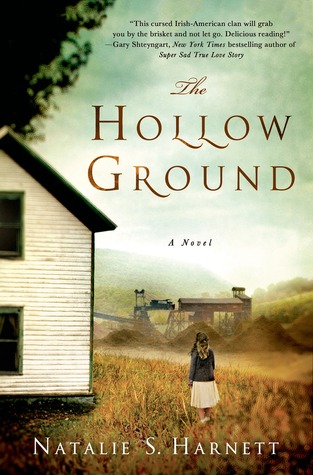
Review: The Hollow Ground by Natalie S. Harnett


I picked up this book from Audible purely because of the setting and the fact that I'm somewhat fascinated by Centralia, Pa, which is what I thought it was based on. It's creepy, and I love the whole "ghost town" aspect of it, and the fact that it's been the basis for horror settings like Silent Hill just makes me even more fascinated by it. But I've never been there. I've lived in the Anthracite Coal region of Pennsylvania since 2004, and have visited some of the historical sites of that industry (Concrete City, the Mauch Chunk Museum in Jim Thorpe, the Anthracite Museum in Scranton, and used to drive past this abandoned coal breaker every day for work... etc), but though I only live an hour or so from Centralia, I haven't yet been to see the town, or what's left of it, for myself.


In fact, until right now, I thought Centralia was unique in being, you know, on fire. I came all gung-ho to this review to talk about how many liberties this author took with just setting towns on fire for dramatic settings for her book... You know, something like: "How much of the state did she think was on fire? Because it seems like 'all of it' is the appropriate answer - at least three different fire zones?? Come on..." and here is the point where I have to admit that, no. I'm the ignorant one. According to this article from 2014, there are currently 8 moderate to serious mine fires in my county and the neighboring county directly north of me, and if a comment on that article is to be believed, there are as many as FORTY-FIVE fires throughout the state.

Let me reiterate that in case you blinked and missed it. That's 2014. Two years ago.

And Google, EVER so helpful, informs me one of those fires is just a few miles from me, in a town called Laurel Run. That's been burning since 1915, and caused the entire town to be demolished and relocated in the 60s until it was contained in the 70s. And I could WALK to it right now. I can practically see it from my house and ohmyshit IT'S STILL ON FUCKING FIRE.

Thanks Google. So much. Really.


Well, shit. On the bright side, since I'll never sleep again, I guess I'll get a lot more reading in.

OK, I'll stop being dramatic and actually talk about the book a bit. So, like I said, I picked this up because of the setting. I listened to a sample, and the first line hooked me, and the cover didn't hurt either. I REALLY wanted to like this book. I wanted it to be creepy because of the setting, and heartbreaking, because what else COULD it be? And I wanted it to be well-written and historically accurate (or at least close) because, even though I didn't grow up here and have no roots here, I love the history of the area and wanted this book to represent that history well.

In other words, I set myself up for disappointment.

It's almost not fair to rate this book because of the high expectations I had. (Though when has that stopped me before?) In this case, it just fell short for me. I think, possibly because of the interest I had in the setting, it is almost like this should be rated on two different levels. The setting, and the story plopped down on top of it.

So let's talk about that. I live in this area, and so, perhaps, I have a bit of an advantage when it comes to picturing it. I could see the mountains and the valleys as I listened, and I know many of the actual real-life towns mentioned (Wilkes-Barre, Scranton, Allentown, etc), though I can't say that I know how they'd have been in the 60s. I know the way the light shines through the trees, and how the snow falls, and how different the area looks in each of the seasons. (Not so pretty now, mid-winter with no snow to cover the brown and dead trees, but in a few weeks, or in the fall, it will be one of the prettiest areas you could find.)


I know the pride that people have in their homes and land here, so it's not hard for me to imagine people staying despite the ground beneath them burning, despite poisonous gases seeping up through their basements and homes, despite the risk of cave-ins and sinkholes, etc.

The setting, I think, was OK... but it still felt like it was given short shrift. I wanted area and the time and the peril to be a character on its own. I wanted it to feel alive and real... And to a point it did, but I think that much of that was me projecting my knowledge of the area and its history onto the info given in the book. I brought more to it than it offered me, if that makes sense.

The story felt detached from the setting. Which is odd because it was tied so closely with the mines, specifically THESE mines, and tried to be more meaningful than it was. Brigid, the main character and narrator, knows quite a bit about mining because her daddy and uncle and grandpa were miners, and she's grown up in it. Her grandpa is dying of the Black Lung, and her uncle died in the mines during a cave in - one in which her father was also injured.

But the story around the family and its secrets felt like it was separate from the area. I wanted a profound tie, something that would be unique here, something poignant and interesting, and instead it was the same kind of story I've read a thousand times before, only set in the Pennsylvania Anthracite region. It felt... cheap. I wanted the story and the setting to meld, to be parts of a whole... but if you take the setting away or change it to anywhere else, the story wouldn't change that much. Just the details. I was disappointed by that.

That being said, the family story was well-written. I liked the characters and feel of the story, even though it was massively predictable. As I listened to this while driving to Pittsburgh and back, I called events and revelations well before they were revealed in the book.

I did like the circularity and the familial themes in the book, though. I liked how the title can both refer to the literal ground, and also familial foundation. I liked that it was somewhat realistic in that things don't always work out to be a happy ending.

Also, I liked the writing, for the most part. This is a beautifully descriptive book, though maybe a bit too much so, given the fact that an 11 year old girl is narrating it. It just felt a bit too... precocious. Especially given the way the brother is depicted. He seemed to be somewhat mentally or developmentally disabled, seemingly unable to form full sentences even at nearly 7 years old (and actually, the only things I remember him actually saying are "No!" and "Want home."), yet here's his sister describing things like this:

  Through the kitchen window came this light, the color of swallowtail or goldfinch wings. I've never seen a light like that again. It felt like it shot through the slats of my ribs, searing me with a kind of happiness maybe all kids feel 'cause they don't know any better. But then deep in Brother's plump little throat formed this squeal of delight. Within seconds he was up, standing all on his own, and charging toward us with his first steps.

Ma turned, spreading her arms, cooing like a mourning dove. But when he fell into her, sobs shot from her mouth like the fire itself had flamed up through the floor and singed the skin from her bones.
And this:

  When I woke that February morning, the morning that changed our lives, the pinkish air pushing in the opened window told of snow. I snuggled closer underneath the covers toward Auntie and pictured the mine fire flaming along the veins of coal beneath our town, veins as numerous and intricate as the blue ones on Auntie's legs.

What eleven year old thinks or talks like that? I get that she's smart, and reads historical romance and A Tree Grows in Brooklyn (a book I've seen this compared to - I see what you did there.), I still don't think that THAT kind of descriptiveness fits.

I'm a little ambivalent about the mystical aspect of this book. This is an Irish Catholic family, and they believe they are cursed. Brigid also becomes friends with a Puerto Rican girl who believes that she can see spirits. This is interpretable as being superstition and mysticism, or you could take it literally, if you were so inclined... I wasn't. I thought that it was a little trying on my patience. I would have liked the story to live strictly in the realm of the real. This aspect of the story felt out of place and distracting. It was almost like, because the main character is a young girl, the story didn't know what it wanted to be, and kept losing itself in this "fantasy" realm. So for the most part, I just rolled my eyes and waited for the story to move on.

Finally, because I need to wrap this up... I did not like the reader of the audiobook. She did that "little girl" voice that I freaking HATE. It annoys me that audiobook producers think that stories narrated by young girls (or teens, or young women) have to sound like they are 8 years old. The voice doesn't match the personality. Brigid is strong, independent, intelligent, and insightful. She's not a vapid little girl, so I found it annoying as hell that she was read that way. I didn't like the way that some of the adults were read either. All of the grandmother aged women sounded alike. All of the mother aged women sounded alike, except for Ma, and that was only because Ma was given so much description of her tone and expression and personality that to read her in the way the other women were read would be completely out of character. But all of the other women sounded "southern gentlewomanly". Makes sense, because the reader, Luci Christian, is from Texas. But that's not at ALL how accents around here sound. Aggravating. I really wish that they'd have gotten someone from the area (or at least who would understand the dialect) to read this.

Anyway... Overall, I liked this. I'm not disappointed that I spent an Audible credit on it, but I did want a bit more out of it. I think that, for the right kind of reader, this could be a great book. And for a debut, it's definitely not the worst I've read. (Well that sounds like a shining endorsement, doesn't it? LOL)

OK, in summation... I have a fair amount of complaints, but when I wasn't able to listen to this, I was thinking about it, so that's a good thing, right? I'm going with 3 stars for that, but if I drop it down to two in the coming weeks or so, I think that would be fair, too.


View all my reviews
Tuesday, April 9, 2013

Review: Romeo & Juliet by William Shakespeare ★★★

Romeo & Juliet; Or: How Verona High Society Was Devastated Due To Two Kids Who Couldn't Keep It In Their Pants for 24 Hours.

This story is only a tragedy in the sense that, through their stupidity and selfishness, Romeo & Juliet caused others to suffer.

When we meet Romeo, he's in the throes of grief over Rosalind, who he is "in love" with, but who is not interested in him. Oh, he's in a right tizzy over her. The sun shines out her ass and all that, and the world is just a pit of despair without her in his arms, yada yada yada.

Then, OH HAPPY COINCIDENCE, he learns that she'll be at the Capulets' place for a party, so he can go stare creepily at her for a while, and just be in her presence. (Wonder if they had restraining orders back then?) Anyway, while at the party, Romeo blinks and forgets Rosalind completely, because pretty girl! And... is that...? Why yes. That IS the sun shining out of her ass. Someone must have just misplaced their flashlight at Rosalind's rear, because now that he's seen the true sun, there is OBVIOUSLY no comparison in the brilliance of the light.

We're told in the beginning of the story that Montague and Capulet have this feud thing going on. I dunno why, they just do. Makes for a convenient conflict. Tybalt, of Clan Capulet, recognizes Romeo, and thinks he's there to start shit. Remember - feud. So, he makes to fight him, but is shouted down... so he just files it away for future reference. AIN'T NO MONTAGUE GON' COME UP IN DIS CRIB, YO!

Romeo gets all kissy with Juliet. Juliet gets all swoony (it was her first kiss, being all of almost-14 and all), and within a few hours they are engaged. The next day they are married.

Taking things slow. As a lovely wedding gift, Romeo kills Juliet's cousin Tybalt. Well, I mean, Tybalt started it! *stamps foot* He TOTALLY killed Mercutio FIRST! DANG! And so he's banished from Verona.

Verona Death Count: 2

Juliet loses her shit.
Romeo loses her shit. (That's not a typo. Even Friar Lawrence calls Romeo out for crying like a little bitch.)

I would like to take a moment right now to talk about Juliet's moment of losing her shit. Because it is just a moment. Her nurse, who goodness knows needs to be slapped at the best of times, can't be trusted to relay a message accurately, and essentially mindfucks Juliet into thinking for a goodish chunk of time that it's Romeo who is dead. Understandably, Juliet is distraught at the thought that her boyfriend of 12 hours/husband of 3 hours is dead, and she didn't even give up her maidenhead yet (not making this up... she literally laments the fact that he'd not taken her to bed yet)... So, when Nurse FINALLY sets her straight that her boyfriend isn't the murdered but the murderer... Juliet is relieved, happy, and sees this as a comfort.

She sees the murder of her lifelong cousin at the hands of a dude she's known for 12 hours and who previously was a sworn enemy... a comfort.

And she didn't even know if the sex was good yet. O_o

Anyway... So, like... They meet up that night, Juliet finally finds out how the sex is (apparently good enough - WHEW!) and in the morning, Romeo leaves town (banished), and Juliet's kindhearted father promises her to Paris (who I am sure is a nice man, but apparently he ain't no Romeo) and when Juliet refuses, he casts her out. Well, he leaves the option for her to be uncast her out if she agrees to marry Paris. He's a good dad. So accommodating and caring.

She demands Friar Lawrence to help her, so he gives her a potion to allow her to fake her death. She lies to Mummy and Daddy that she'll marry Paris, and then fake-offs herself. Much sadness ensues. The Friar tries to tell Romeo of this plan, but his letter was waylaid, and he found out about Juliet's death through another messenger who didn't know it wasn't real, and he makes haste back to Fair Verona to real-off himself to spend eternity with his wife. Of two days, if my count is right at this point.

Apparently Paris also had the thought of going to visit Juliet, and he meets Romeo, they fight, and Paris dies.

Verona Death Count: 3

Romeo offs himself.
Juliet offs herself.

Verona Death Count: 4 & 5

The parents show up with the prince, who after about 5 minutes' investigation into the events, basically says "See what this stupid feud did? Everyone loses."

So, unless I missed someone in my accounting, Romeo and Juliet caused 2 1/2 deaths per day of their marriage. Could you imagine the state of Verona had they NOT both killed themselves out of angst-ridden lust?

The moral of this story: Just have sex and get it out of your system.


View all my reviews

Saturday, March 2, 2013

Review: The Fault In Our Stars by John Green ★★★

The Fault in Our Stars3.5 stars
Ok, so a little background, just to get a base point for some of my reactions to this book. In late 2010, I read Green's "Looking For Alaska". I ended up liking it more than I thought that I would, but for a long time I'd avoided it based on incorrect preconceived notions regarding what the book was about. It wasn't until I'd watched some of John and Hank Green's Vlogbrothers videos that I decided to go for it. And that made a difference. I could see John in the story - in the quirky intelligent teen characters, in the irreverence, and I liked it. After that, I bought "An Abundance of Katherines" & "Paper Towns", but I haven't read anything but their synopses yet.

So, flash-forward to present day. "The Fault In Our Stars" is chosen to be read among friends, and so I read it. And immediately, I'm struck again by the quirky intelligent teen characters, and the irreverence... But now, it's not so different, because now it seems like a pattern. A style. And that makes it less meaningful. When everyone is profoundly quirky and intelligent, it begins to seem a little trite.

So here again we have quirky intelligent characters, including a host of 16 year olds with ridiculously sophisticated vocabularies, and including an "extremely sophisticated twenty-five-year-old British socialite stuck inside a sixteen-year-old body in Indianapolis". These are midwest teenagers who sound like they're members of the Intelligentsia. Everything is profound and has "metaphorical resonance". It just didn't feel realistic to me.

Case in point: At one point there's correspondence with an author of a book that the main characters found profound, and I had a hard time differentiating between the voice of the Profound Author and the teens.

That shouldn't be the case. Ever. When one of the teens mentioned rhetorically whether the other thought they'd made up the Profound Author's letter, whether it sounded like something they'd come up with, I thought, "Yes!"

It's just too much for EVERYONE in these stories to be so quirky. Where are the average teens who just hang out with each other and don't use $10 words to say hi to each other? It was just unrealistic for me, especially in a book trying desperately to show that kids with cancer are just normal kids who shouldn't be treated deferentially just because they are sick. The problem here is that these weren't normal kids. These were extraordinary ones. Like everyone else. *sigh*

It took about half the book for this annoyance to peter out. It was like, at this point, the quirkiness and $10 conversations took a backseat to the story, finally. And that's when I really started to love it. Coincidence? I think not. Extraordinary characters are great and all, when, as a friend put it, they have "an ordinary background to shine against". I couldn't agree more.

I was far more affected and heartbroken by the simple, no-nonsense way that Hazel talked about her parents and how they were coping (or failing to cope) with her cancer prognosis than by her constant multi-syllabic conversations about the metaphorically resonant quality of... whatever.

There was a line near the end of the book that kind of summed this up perfectly:
"He wasn't perfect or anything. He wasn't your fairy-tale Prince Charming or whatever. He tried to be like that sometimes, but I liked him best when that stuff fell away."
I loved all the bits of this book that were in between all of the uber-profound stuff. The bits about loving and losing in terms of how much both hurt in stark terms of pure aching. Fancy words are fancy, but sometimes the beauty is in simplicity. When all the pretense fell away, and it was just two people wanting to spend as much time as they had left together, it became the story it always should have been.

This ended up being a moving and heartbreaking book, but I think it would have been a much better one had it been written more simply.

View all my reviews

Monday, December 31, 2012

Review: Anna Dressed In Blood by Kendare Blake ★★★

Anna Dressed in Blood (Anna, #1)Wow. I just realized that I added this book to Mount To-Read exactly one year ago today. That's pretty strange, isn't it? I mean, I picked the book up yesterday on a whim, thinking that it would be light, quick reading to squeeze in before the new year. I wasn't looking for any weird cosmic alignments or anything... but it is kind of cool.

As was this book. I really enjoyed it. It was different, very different, than what I expected, but not in a bad way. Well, maybe not ALL bad, because I do have a few *cough* teensy weensy gripes about it.

But first, the things I DID like.

- I really liked the realistic teenager tone of the story. I liked how there were some f-bombs, and how Cas skipped school (albeit for really selfish reasons like "work" and stuff), and how the characters were all relateable. I liked how the usual student tropes both did and did not fall into their usual lines of "Big Dumb Jock" type, or "Most Popular Homecoming Queen Bitch" type, or "Outcast" type. I liked reading about these characters, even the ones I didn't like, and I am excited that this is the beginning of a series. I want to see more of them.

- I really liked that it was a bit horrifying. To be honest, I had kind of pegged this book, pre-read, as that "light, quick" read (as I mentioned before). I thought it would be a little cartoony, may be a little funny at times, but not something I expected to be in any way horrifying. And I don't mean it was scary, although there were some bits that could have been, but I mean more of a "Oh crap, that's not good" kind of horrifying. I liked that it wasn't cartoony or funny (though again there were moments of levity), and I liked that the method of the deaths we're privy to aren't glossed over. We see them as Cas sees them... or as he'd rather not.

- I liked the way that the "Ghost Whisperer" concept was made into something that didn't make me fall asleep and drool all over my nook. I mean, no offense to Jennifer Love Hewitt or anything. I know she's got a lot of loyal (male) fans (fanatics) who watch every episode of her show (hoping for cleavage... COME ON!), but I just can't. I think I've seen one episode and I was bored. BORED. This book though, was not boring. This is no Ghost Whisperer, though Cas does help restless, violent spirits go... somewhere... by murdering them... again. SLICED AND DICED! I like it.

It was gritty and interesting and different. I liked how the practitioners that Cas gets to help him (witches), were portrayed and the way that the rituals and spells were done was different from what I've seen before, though admittedly, that's not all that much. I liked the twist near the end, though the resolution did kind of do a little "fade to black" thing. We're left to assume the outcome based on the set of details, but still hope...

So now we come to the stuff that had me griping. Two things, mainly. OK three things. Tops. Two gripes and a rant.

#1 - The action scenes were a little sketchy and hard to follow for my taste. I like to visualize fight scenes in my mind, and these were hard to see, as they didn't always make sense linearly.

#2 - I don't understand how normal people don't believe in ghosts if they are apparently able to see them all the time without trouble. I can understand Cas's ability to see them, and I can understand the witches being able to, but the Normals, the students with no special abilities at all can also see them (at least 3 different ghosts). Maybe they've all "manifested" as visible to everyone, but I would have liked some sort of explanation here. Either that they HAVE to have manifested even for Cas to see them (which seems likely since Tybalt was a kind of ghost detector), or that proximity to Cas or witches allows others to see ghosts too, or something.

#3 - The Insta-Connection. I was hoping that the connection that drew Cas to Anna would be explained, and it may still be later on in the series, but as of right now, I don't get it. And honestly, that cheapens the story to me.

It would have been a better, stronger story, in my opinion, if Cas was less emotional about Anna, and rather than falling in love with her, he freed her and used her as an ally... maybe working up to something more later, after we get to know them and their characters and situations better. Or not, even. But falling in love with a ghost is hard to believe, despite my suspension of disbelief with the rest of the story, and given that I don't like insta-love (under any euphemism) in the first place is just... kind of disappointing.

I really don't understand why books written for teens and young adults rely so heavily on instant connections and immediate love. I was a teen once, and yeah, I had crushes, and boyfriends, doodled sickening little hearts with initials in them on the margins of my papers (don't tell anyone), and thought that THIS GUY was THE ONE, but I never once felt a bone-deep, undeniable, magnetic connection with anyone. Ever. No matter how strong my feelings were. So I don't get why this unrealistic trait is repeated in book after book after book. It's really starting to turn me off of reading YA. I'm so tired of it. I cannot wait for this trend to be ooooovvvveeeerrrrr.

Please, authors, PLEASE. Stop this. Write realistic relationships!!! I want to read them. Not soulmates or instant love that requires no effort except against outside influences trying to break it up. That's incredibly boring to me, and I'm more than ready for something different!

But still... I DID enjoy the story overall, and I WILL continue the series to see where things go. I'd be interested in the character development of some of the characters, and in seeing more of Cas's world... and possibly others.

Wednesday, August 1, 2012

Review: Guns, Booze & Zombies by G. Joseph ★★★

Guns, Booze & Zombies(Received E-copy from the author for review)

Once upon a time there was a girl who read a zombie book she didn't like (What?! I know!!), and wrote a frustration-filled rant review about it.

This review was then seen by another author working on his own zombie story, and he contacted the girl to thank her for writing her review because he said it helped him in shaping his own story. She was all pleased as punch about this, and offered to read his book to see how it came out.

This is the review of that book.


(Also, surprise! I'm the girl. :D)

(In case you didn't know.)

So, what did I think of "Guns, Booze & Zombies"? Overall, I thought it was on the high end of OK to good scale, but a little spit and elbow-grease would make it really shine.

I really enjoyed the concept and setting of this story: A zombie outbreak in Prohibition Era New York. It sounded intriguing - I don't think I've seen a 30s era zombie story before. (I mean, I've seen Nazi Zombies, but that's a whole different set of entrails there.) I was interested to see how Prohibition was worked into the story, and to get the feel for 30s NYC. But as much as I liked the concept, I did have some issues with the execution.


See what I did there?

Storywise, it was a little too skewed toward the "tell" side of the spectrum, and I wanted more "show". The Prohibition aspect felt sadly lacking, as was the Depression. They were mentioned, of course, but I never truly felt the impact of either one. They never felt like hardships. Benson is evicted, but since the story moves almost right into Escape From Zombie New York, the impact is dulled and I felt as if it was almost unimportant. For another example, we're told that Benson Doss and Emma have rekindled their romance, but this doesn't quite mean anything because 1) we didn't know they had one in the first place, and 2) randomly meeting up in a speakeasy and having a few drinks doesn't exactly scream "rekindled romance" to me. That says, "They're friends, and she's a forward thinking kind of gal that will buy a down-on-his-luck guy a drink." For me to believe the romantic aspect, I wanted to see them react to each other, be attracted to each other, to maybe talk things through and discuss where attempt #1 went sour, commit to trying again, that sort of thing. All of which I missed.

I wanted to really know the characters, and care about them, but I didn't really get that as much as I'd have liked. In fairness, this is a novella - it's only 117 pgs on my Nook. But there's a lot of stuff packed in those pages, and I feel like a little more focus on the characters would have brought a bigger impact when bad things happen to them. For example, when we find out about a character's softer side, which leads into a side plot, I was able to sympathize with him more and wanted things to work out for him. But I didn't really feel anything close to that connection with any of the other characters.

Two other big story issues affected my enjoyment of this one. First, the side plot I mentioned was never resolved. Maybe there's a 2nd book in the works, which wouldn't be a bad idea, since the second issue I have is the twist at the end which came out of left field. It was just... OK, maybe not as unbelievable as one aspect towards the end was... (view spoiler)[The group of remaining survivors meet up with the Army, and the commander instantly knows who Benson Doss is, and turns over command to him...? My suspension of disbelief turned into a lead weight on that one. (hide spoiler)]... but still out of left field.

Finally, my last issue is with the lack of editing. This book is badly in need of an editor. I mention this because, to my knowledge, I was sent a copy of the final, for-sale version. There were quite a lot of misused words, missing commas, unnecessary semi-colons, misspellings, and awkward syntax all over the place. Every instance of the word "quiet" was misspelled "quite", "site" and "sight" were used interchangeably, among other misuses. Also, it seemed that words were switched out in favor of "better" ones that made the sentence awkward in many cases. Often, the simpler word will fit more naturally into the sentence than a less commonly used one. Example: "We allow the team to gather some excess sleep." This just feels clunky to me. It would feel much more natural as "We allow the team to get some additional sleep."

I actually did enjoy the story, though, despite my complaints above - I was interested in seeing where it went and what happened, and if there was an explanation for everything. I really enjoyed the goriness of the fighting, and liked, oddly enough, the sentimentality some held toward their loved ones turned flesh-eating-corpses. I would be interested in reading the sequel, if there should be one. I definitely think that G. Joseph has potential. He's one to watch.

----------
Also, as a side note, I would like to say that G. Joseph has been beyond courteous and professional in all of his messages to me. I thanked him privately for this, but, especially in light of the recent author/reader drama 'round the interwebs recently, I would like to publicly do so as well. 

So thank you G. Joseph, for remaining professional and pleasant. This is exactly the right way to go about the author/reader interaction. Best wishes for a successful and long career! :)

Friday, April 13, 2012

Ready Player One by Ernest Cline ★★★

Ready Player OneReady Player One by Ernest Cline
My rating: 3 of 5 stars
You know that thing, the thing that everyone else thinks makes you the nerdiest nerd to ever nerd? That thing is what this book is all about, and it's awesome.

Mostly awesome.

This book celebrates the geekdom of the 80s. The music, the movies, the books, but especially the games and technology. Because the 80s were full to the gills of new technology that allowed games to move from boards to computers and game consoles. It allowed awesomeness like this to exist:

--------------------------------------
Announcer: Are you tired of dad?
Boy: Dad, no one wants to hear your stupid Vietnam stories!
Announcer: Are you tired of mom?
Mom: Hi angel, do you want to read a book or go outside?
Boy: No!

(Degenatron!)

Announcer: The arcade comes to your living room, only without the creepy guys offering to show you puppies.
Boys: Awesome!
Announcer: With the Degenatron, you can play video games just like you are in the arcade!
Kids: Excellent!

(Degenatron!)

Announcer: The Degenatron gaming system plays three exciting games including Defender of the Faith where you save the green dots with your fantastic flying red square.
Boys: Cool!
Announcer: Monkey's Paradise where you swing from green dot to green dot with your red square monkey.
Boys: That's rad!
Announcer: And Penatrator where you smash the green dots deep inside the mysterious red square.
Boys: WOW!
Announcer: The Degenatron brings arcade realism to your living room. It can even take quarters and a strange sweaty man comes by to empty the machine on Fridays.

(Degenatron!)

Announcer: Degenatron, fighting the evil of boredom.

Boys: I'll never go to school again!

(Degenatron!)
--------------------------------------
If you're not familiar with this, it's a fake commercial played on one of Grand Theft Auto: Vice City's in-game radio stations. GTA Vice City is set in 1986, and there are tons of references contained therein... Mostly of the 'did-they-really-just-say-that?' variety. The one above is a reference to the awful graphics of 80s computer and console games, and the creepy guys usually found around arcades. Speaking of which, anyone looking for a puppy? I know a guy...

Anyway. This book is exactly what GTA:VC isn't. It doesn't make fun of the atrocious 80s... it celebrates it. It celebrates the huge amount of innovation and change that occurred in that decade, and the huge amount of geekdom that fueled those changes. This book celebrates all that the D&D players have always dreamed... that they can do exactly what they love and hit it big by doing so.

That's what James Halliday did. He took his love of 80s pop culture and made it into the Moste Epice Queste EVAR before he died. He created the world's first truly immersive virtual reality game and free education system that is as vast as imagination itself, The Oasis, and promised to leave it and his megabillions (really) to the first person who successfully completes his quest: Find 3 keys, go through their respective gates, and then find the egg.

Enter 'Parzival' aka Wade Watts, 18 year old orphan (does one still count as an orphan once they've hit their majority?) who is obsessed with finding the egg and winning the ultimate prize. But maybe more than the desire to win is the desire to prevent the Sixers from winning. The Sixers are employees of The Oasis's rival corporation, who would love nothing more to win the Oasis cash cow and then start milking it dry. Instead of free use (services, such as transportation, is paid for in the Oasis, but logging in is free), there'd be a monthly fee, higher fees for everything and ads galore, which in the hard times of economic collapse shown in the book would reduce the availability to only those rich enough to pay. In other words, they'd ruin the only sanctuary that millions of people have from their hard day to day lives.

The first 3rd of this book was AWESOME. The parts of the book pertaining to quest and battles were awesome. The concept and the detailing and the story was all awesome. There were some parts that were so exciting I couldn't put the book down, but then there were others that were a bit frustrating or (dare I say it?) boring. So brace yourselves... I'm about to start inventorying my complaints.

This book seemed to go in waves. Something thrilling would happen, and then it would shift to very not thrilling. Then after a while, it'd start to build momentum again, and then the same thing again. So it was a little hard to keep my interest going the whole time, because I don't think that I need to know every single detail of the components of Wade's apartment or his gear for logging in and using The Oasis. I don't know what any of it means anyway, though I can guess it's pretty cool. It just got a little tedious and I got impatient to get back to the quest.

Likewise with the romance. Let me just say up front that I know Wade is 18, and has never really interacted with girls before, let alone an awesomely popular famous hottie girl who just HAPPENS to have all of his same interests and hobbies and whatnot in common with him, so I know it is unfair and unrealistic of me to get irritated by the romance element to this story... but I did. I just didn't much care. Just ONCE I'd like to read a story with a young adult protagonist that doesn't have a romantic theme, or at least not an insta-love one. It just got a little tedious and I got impatient to get back to the quest... again.

Then, the dialog. Oh goodness. It was awkward. It FELT awkward. Too forced and too "hip" and too everything, especially Aech's slang, and it felt fake. Didn't work for me there.

Finally, we come to the issue of death. I feel like the way death was portrayed in this book was somewhat ridiculous. First, let me say that there were two kinds of death: avatar death and real world death. Avatar death means that your Oasis character dies, you lose all your stuff (status, inventory, credits/money), and you start over from no0b status. Real world death means you, the person who exists in the real world, actually die, for realzies, no do-overs, no resets, no reloads, you're just dead. D-E-D, dead, as my daddy would say.

Now, there were a couple of RW deaths, and it was one of these where I couldn't put the book down. It was crazy intense and I just had to know what was gonna happen next. But for all the intensity, it didn't seem to register much on Wade's "Oh Shit!" scale, at least not when it came to avatar death. There's a scene where a big battle is going down, and avatars are rushing in to do battle without hesitation, knowing that it could mean their death, and it was portrayed as really brave and harrowing. And I wondered to myself... So what? Why the dire reaction? It's just some data in a server somewhere that would be zeroed out and that person could create a new one. It's not a real life-or-death situation, so I don't really feel like it was all that brave.

But then on the other side of the coin is the fact that the bad guys could go after Oasis players and Real World kill them. Yet at the end, there's no tension around this possibility, because deus ex machina arrived to provide the way, or it was just conveniently forgotten that the real world existed in the heat of battle... or probably both.

So... While I really did enjoy this one, obviously I had some pretty large issues with it. It was a fun story, and I have already recommended it to a few of my friends that I think would enjoy it, but I admit that I wish I'd enjoyed it even more than I did.

I'm very curious to see where Cline goes from here though. I'd definitely pick up his next book, and in the end, that's really all that matters, isn't it?

View all my reviews

Sunday, March 11, 2012

Review: The Lions of Al-Rassan by Guy Gavriel Kay ★★★

The Lions of Al-RassanThis book has come highly recommended by almost all of my friends, and so naturally, I was very excited to read it. This was my first experience with Kay, and the consensus seems to be that this is his best work. Certainly the Goodreads average rating bears that up. Lions of Al-Rassan currently has a an average rating of 4.27 of 5. Pretty impressive, and the highest of all of his books.

It just didn't quite get there for me. Maybe it was the expectation of greatness that let me down, but I don't know. Maybe the fact that I don't have much knowledge of the history of the Iberian peninsula, but again, I don't think so. By all accounts, it's not really necessary to have external knowledge prior to reading Lions. It's not that this was bad, or that I didn't like it... In fact I'm having a hard time putting my finger on just how I'm feeling about it, now that I'm finished. On the one hand, I liked it quite a bit, but on the other, I felt like there was just something missing or off about it, and I had several issues that I can't ignore.

So this is going to be something of an itemized review...

Characters: This was by far my favorite thing about this book. I am a character reader, and I need characters that I can identify with in order to enjoy a story. This one was full of brilliantly real characters. There was quite a cast, as shown by the full character list at the beginning of the book, but I never felt confused by who was who. I loved the four main characters: Ammar, Rodrigo, Jehane and Alvar. (I also loved Rodrigo's wife Miranda, who was awesomely bad-ass. I would have loved to see much more of her.)

Ammar and Rodrigo kind of represent their people and cultures in the book, although not well at all. Most of their respective cultures are caricatures of pious intolerance and hatred, whereas Ammar and Rodrigo are both good, honorable, and open-minded men, who are willing to accept and trust based on character, not purely on belief in the "right" god. So while Ammar is an Asharite and Rodrigo is a Jaddite, they still find a way to work together.

There were quite a few emotional moments while reading this, and though I feel like they could have been better written (which I will get to in a bit), I still felt for the characters and the things that happened to them. I did feel like some of the follow-up with some characters left something to be desired, but the characters themselves were well done and fleshed out and real.

Worldbuilding: The worldbuilding here was one of the aspects that I struggled with the most. At times it was overwhelming in the amount of information given at once, but still I felt like there was still more I wanted to know. There were places named that we never got to see, but were clearly important to the history, like Aljais, or Soriyya. The descriptions were gorgeous, and I could see everything clearly, but I wanted to know more about the places that were important but never shown.

Religion: The religious aspects of this book were well done, and the dividing lines between the three different religious groups were drawn clearly, but I wanted to know more about what each believed in, not just who they hated and wanted dead because they believed in something different.

Not knowing what they actually believed in, it was hard for me to identify with either the Asharites' or the Jaddites' beliefs. Are these gods so bloodthirsty that the only valid form of worship is saying that you do and then killing those that don't? Was there no other form of worship? The Asharites abstain from alcohol, but unless I missed it, I don't see anything at all that differentiates them other than the name of the god they worship and whether or not they'll have some wine with dinner.

The Kindath were different though. I don't know much about their beliefs either, but it seems to me that they were to be equated with Jews, at least in the way that they were treated and persecuted. They at least seemed peaceful, wanting nothing more than a place to live peacefully. This apparently equates to baby-killing monsters to the bloodthirsty Asharjaddites, who both hate the Kindath. Because who better to persecute than the people who aren't allowed weapons? That being said... it was realistic and believable that different religious sects would want to kill each other. Not logical, but religious belief rarely is.

Writing: For the most part, I liked the writing. I thought that it was readable and in general, the prose was beautiful. There were some unexpectedly funny parts, and overall I liked it.

But I did have a big problem with the writing in one aspect, which was that anytime there was a moment of suspense, Kay would write the scenes in such a way as to draw it out to unnatural lengths. For instance, the one that bothered me the most was a scene in which a character died. For nine pages, we were left wondering who it was, theorizing, trying to determine who it could be. By the time the name was finally given (and it was an unexpected one), I was more annoyed with the delay tactics and manipulation than I was distressed about the character's death. I was upset about the death, but it was kind of overshadowed by a feeling that I was being manipulated. I felt that it cheapened the loss, and took away from the emotional impact it should have had. This was done in different ways and in different situations all throughout the book, and it was incredibly frustrating.

Another issue that I had was Kay's tendency to skip action, and then tell us about it later. I can sort of understand the decision for doing this. It allowed him to not only tell us what happened in condensed form, but gave us insight into some of the characters as well. I just didn't like it. I want to see the action. I want to be part of the story, not an outsider being filled in on the details later.

Pacing & Plot: At around the 75% mark, I started wondering where this story was going and how it would possibly be resolved in the remaining pages. We've been with these characters for a while, and there's been a lot of build-up and pieces moving into position, little battles and maneuverings, but nothing has really happened yet. The huge campaign to reconquer the disparate peninsula lands and reunite them into one large kingdom of Esperana hasn't even started. Of course, the epilogue sorts out what happened and fills us in on the important details. All the build-up and then the climax felt rushed and almost like an afterthought. Disappointing.

I wanted to love this book. Maybe if I'd read it before reading some of the amazing epic fantasy I've read in the last year, I would have. But the writing here just felt like it got in the way of the story. Yes, it was beautifully written at times, but the need to be mysterious and drag out the suspense, and circle back to tell us about the action or important events rather than just showing them to us to begin with really didn't work for me.

TL;DR Review: I liked it, but thought parts could have been better.

Wednesday, January 25, 2012

Review: Harry: A History... by Melissa Anelli ★★★

Harry, A History: The True Story of a Boy Wizard, His Fans, and Life Inside the Harry Potter PhenomenonHarry, A History: The True Story of a Boy Wizard, His Fans, and Life Inside the Harry Potter Phenomenon by Melissa Anelli

I admit it, I was a Harry Potter late bloomer. I've told the story before, so suffice it to say that it wasn't until after the 5th book was out that I became a Harry Potter fan. I immediately fell in love with the books and the world... but I missed almost all of the "Harry Potter phenomenon" as it was still in progress.

I only had a few friends (back then) that were Harry Potter fans, and we discussed the books excitedly, and re-read them repeatedly, but I didn't know that I was missing this whole world of HP fandom. When the 6th book released, the B&N in my area, rather than waiting for the midnight release, had already closed up shop by 11:30pm when I got there after racing from work. I was mad, reamed out the manager, and refused on principle when he offered to open the store again for me to buy a copy. I bought the book from the local grocery store instead. So it wasn't until the 7th book came out that I started to understand the magic of the Harry Potter release parties I'd missed... and the one I went to was small even to my naive eyes. But man, it was exciting. People were dressed up, there were games, the staff was doing trivia, people were practically doing the pee-dance in excitement... and when 12:00am came, the bookstore was like a well oiled machine. Every register opened and started ringing out excited Potter fans like it was a race.

That experience was amazing, and I'm glad that I got to have at least one before it was all over. Better late than never, huh?

Back then, I never knew the extent of the fandom. I knew there were websites, and I'd visited The Leaky Cauldron and the HP Lexicon. I knew that there was fan fiction, but I was never interested in it. (I'm a purist.) I didn't know that there were bands based on Harry Potter, or that there were podcasts, or conventions or anything like that. I'd seen a few YouTube videos of HP themed music, but I'd always thought it was a parody thing, never a true band. I hadn't realized that the NYT Bestseller list had been fractured by this series, or that it had changed the publishing industry so much. I knew that this series encouraged new young readers, but again, the extent was so much more than I'd thought. So this book was interesting to me, because it shows just how deeply this series touched peoples' lives.

There was a lot of detail in this book that I found fascinating, like the way that Harry Potter and the Philosopher's/Sorcerer's Stone made it against all odds, and how it changed the industry as I mentioned above, but at the same time, I found some parts of the book to get bogged down in too much detail. I listened to this on audio (although I do have the trade paperback as well), and the opening section, about Melissa's excitement that "it was here", went on for too long before saying what "it" was, or giving any real context to the situation at all. Turns out, it was the release date for the 7th and final book, but I think that the way it was written tried for a bit of mystery and excitement, and just failed to get that from me. I kept thinking, "Can we get to the point?" I want to hear about the books, and about the fans and about the phenomenon itself... not one person's squeeing over some mysterious "it" thing the reader doesn't get to be in on. For a while, I thought that "it" was publishing news coming down the pipeline of an exciting new series of books - so, the START of the HP series phenomenon.

I didn't really need to know the color of the dust on the Harry And The Potters' tour van, or exactly how sweaty they were, or that they chose cashmere pullovers because they were less likely to be sweat-stinky. TMI. Really. There were a lot of sections that I feel just kind of got lost in the memories and forgot the point that was supposed to be made.

In addition, aspects of the book were repetitive and disorganized. Anelli would jump from 2007 (the section I mentioned above, once I finally found out the context), to telling the history of the books being written, submitted, published, sold, etc, then on to how Anelli got involved in The Leaky Cauldron (TLC), to 9/11, to book 5, to how Anelli first read the books.. on and on. It was like playing Frogger, hopping around, back and forth. I really, really wanted a more structured format for this book, especially listening on audio. Sometimes it was hard to follow where I was in terms of timelines.

There were several sections that were repeated at least twice, and I found that to be a little tiresome. Once we've covered the basis of 'shipping/'shippers, I don't need to rehash what it is again later. We can just move on to how it's relevant to the part of the story being told. I want the history and backstory, but I don't need to know, yet again, what the city by city fan count at a Harry and the Potters show was.

Those criticisms aside, I did really enjoy this book. It made me sad at times, especially during Melissa's recounting of 9/11 and her panic at not knowing where her sister was, but it made me happy that the community of Harry Potter fans that she'd so recently found were able to support her. It made me nostalgic for the experience of reading these books for the first time, and watching this story unfold with each book. I didn't have the long gaps in which to theorize and wonder for most of them, but each new book was a revelation in just how much a story could affect me... and it STILL affects me just the way it did the first time. I cry with certain deaths, I laugh at the twins, I cheer for Neville finding the courage to stand up again and again.

These books didn't make me a reader; I'd been a reader since I was little. What they made me was a part of a huge community of people who all share the love of an extraordinary series of books which changed almost everything. I think that Harry: A History did a good job at showing that, despite the issues I had with the writing and organization.

I can't wait to revisit Harry Potter again.

Sunday, June 26, 2011

Review: Roll of Thunder, Hear My Cry by Mildred D. Taylor ★★★

Roll of Thunder, Hear My Cry3.5 stars

Having just finished The Help for the 2nd time, I was already in a place to appreciate this book, and for the most part, I did appreciate it.

The Help takes place in the early 60's in Jackson, Mississippi, during the early stages of the Civil Rights movement. It's a very personal story about 3 women struggling with who they are, both in general and in the environment in which they live. Roll of Thunder, Hear My Cry takes place in the 30's just outside of Jackson, MS, and deals with a lot of the same issues...

Roll of Thunder focuses on the Logan family and their land. Paul Edward Logan bought their land in two parts during hard times after the Civil War, and ever since, the man who used to own it has been trying to get it back in an effort to remake the South how it used to be. Things are not pleasant in 1930s Mississippi. There's a definite imbalance of power with white people having almost all of it, and black people having almost none. This story is about the Logans trying to make a change to that imbalance, even though it is a small one. It's also about finding ones identity, and taking pride in it regardless of what others think or say about you.

Mostly, I really enjoyed this book. It was a quick read for me, and it was brutal and thought provoking. But in a way, it fell short of my expectations. It never really moved me in the way I had hoped to be moved, and even the brutality and the shame and the hurt felt by the characters didn't really affect me in the way that I had hoped it would. I love nothing more than to be heartbroken by these kinds of books, to be left kind of empty and hurting... but I didn't feel that with this one.

Perhaps that is due to the fact that this was told in first person by Cassie Logan, who is 9. On the one hand, this worked in the book's favor because it allowed for a sort of innocence and naivete. Cassie doesn't understand the dichotomy of equality in the South. She thinks that the mistreatment and rudeness are due to forgetfulness and a "grownups vs kids" thing, or just a greediness, in the case of some. She blithely underestimates the fact of skin color in the equation. To her, the hate and the meanness aren't due to the fact that she is black and they are white, it's due to the fact that they just want what her family has (the land) and will do anything to get it back. Which is true, partially, but the fact that they are black gives them less legal ground to stand on, and makes the fight that much more dangerous.

But where I felt that the 1st person lacked was in the rest of the story. It worked well for the innocence and the idealism, but I didn't feel that the family or their neighbors or the story was all that well fleshed out. There were times when I read sections and didn't know how we got there. One minute Cassie is thinking that she needs to do something about the girl who was mean to her, and the next we're in the middle of a protracted plan of action, with no bridge getting us from there to here. This is Cassie's story, so I would expect to at least have a hint of her plans, but instead it felt like it lapsed into a different story for a bit there.

I also felt that some of the things that Cassie saw were unrealistic, and there was a kind of inconsistency regarding when the parents tried to shield her and the other kids and when they didn't or forgot that little ears might be listening. And to add to that, at times I felt that Cassie was kind of annoying in her demands and talkbackitude to be able to tell the story, and that kind of grated on my nerves. At 9, she was both intuitive enough to know when she'd get in trouble for something, but stubborn and oblivious enough to ignore the real potential danger of running off at the mouth... So Cassie heard, and thus told us, a lot more than I think she should have been able to realistically.

Finally, I thought that the ending was a bit of a letdown as well. There was no resolution about the land, or about the secondary plots. There's an ending, a realistic one, likely - but it's unsatisfying. Things come to a head, and then it just ends. This is part of a series, and that probably has a large part to play in the way the ending ended, but I just feel that there was a big something missing, and I'm not sure that I was invested enough in the story to continue on with the series.

I will give kudos to Taylor for telling as honest and brutal a story as she did, and for not softening the blows or the cruelty or the hatred for her readers. At least I didn't feel that she did. There was a palpable feeling of fear and anger throughout the story, as well as menace and a cruel calculation and manipulation on behalf of the men who have the power. A surety that they will win because the law is on their side. I thought that this aspect was very well done.

I am not sure if I will continue on with the series. But I am glad that I read this. It was good, and I feel like if I had read it in school or when I was younger, it would have had a huge impact on me. Reading it today, I can appreciate it for what it is, but I feel like it's missing the impact I wanted it to have.

Saturday, May 28, 2011

Review: Push by Sapphire ★★★

Push2.5 Stars

*****This review may contain some vague spoilers******

I love to read gut-wrenching books. Almost everything that I'd heard about this one practically guaranteed that this would be gut-wrenching, so when I saw it, I picked it up.

And I thought the first third of this book was great. Seeing life through Precious's eyes was horrifying. Her turmoil and her pain and frustration and anger were very real to me and I felt like I could identify with the experiences she's had, even though her life is very different from my own. I thought that Sapphire did a great job with the first 1/3 of the book. She did a great job portraying an uneducated girl, sexually abused, hating herself, her mother, her father, not able to trust anyone, desperate for a better life for herself and her kids.

Unfortunately, the middle and last third were not nearly as good. I thought it lost focus a bit in the middle and I wasn't sure where it was going, but mainly I had two major issues... No resolution, and inconsistency of the writing.

This is the kind of book that doesn't really require an ending all tied up in a bow, because we're supposed to infer that Precious will keep fighting and keep trying until she accomplishes her goals. That's fine with me. It's an unresolved, but hopeful, ending. But what I felt was lacking was the resolution of Precious's mental and emotional states.

This is a girl who has been abused in every possible way all of her life, at the hands of both of her parents. The very people who are supposed to protect her are the ones hurting her, and fucking with her head as well, as if it is her fault that the abuse is occurring. Naturally, she has a plethora of issues to work through, but she doesn't trust the therapist assigned to her in the halfway house, so she never works through them. She never even opens up about them in session. She starts to once or twice at outside support groups, but never fully lets anything out. She's described as going into a sort of frozen state - unable to move or speak or do anything... She's just trapped in her own body and mind. I really wanted to see some sort of resolution regarding this aspect, even if it was just that she found a new therapist that she trusts.

It is true that her journal is an outlet, but it's not enough. She needs someone to help her understand what happened to her, to help her understand that it was not her fault, and how to deal with her feelings of abandonment and betrayal and self-loathing, and how to move forward in her life. It is not enough for me to assume that Precious eventually gets her GED and an apartment and a job that doesn't entail changing some elderly person's diapers and that everything is golden from then on... I need for her emotional and mental progress to match her progress with learning to read and write. And it did not. Which is disappointing to me.

And this brings me to the second point that I found disappointing - the inconsistency of the writing. Sapphire wrote this in 1st person, so it is understandable to me that the writing style would mirror the speaking style of someone who is illiterate or just learning to read and write. I expect to see words spelled phonetically, slang, slews of misspellings and errors and incorrect grammar, etc. All of that is expected, and I think that initially, it added a reality to the story it would have lacked had it been written in more formal prose.

But the issue I had is that the writing didn't progress evenly with Precious's education. For instance, most of the book the word "mother" is misspelled as "muver", but early in the book, it's spelled correctly, and then again towards the end, and sprinkled throughout the book is "mutherfucker". Same sound, same word... three different spellings.

Words directly quoted are spelled and written perfectly, but the same words coming out of Precious's mouth are misspelled or slang, etc. I can see this being used to show the disconnect between Precious's situation and the situation of the person she's quoting (educated vs uneducated, etc), but it felt off to me, because this is Precious writing all of this in her book. I don't believe that SHE would have made that choice, or that she'd have even known she could, to write herself one way and other people another way. It seems to me that she would write what other people say the same way she writes what SHE says.

Another example is when she would write back and forth to her teacher, she would write, and her teacher would write the correct version underneath. Some words would be correctly spelled or used, and then almost immediately misspelled again. It was very inconsistent to me, and was distracting.

This book could be very powerful to some people. I can definitely agree with that. It was compelling and I could understand Precious's inner struggle and her will. I loved that. But I found the story to be a bit lacking in a very important aspect, and the writing style to not completely work.

I did really enjoy the final section, the school book section, with the girls' stories. That's some heartbreaking stuff there.

View all my reviews

Saturday, May 14, 2011

Review: The Running Man by Stephen King ★★★

The Running ManThe Running Man by Stephen King
My rating: 3 of 5 stars

This was a pretty good story, but quite different from what I'd expected. Of course I knew it was a dystopia, and centered around a game-show, but other than that, I didn't have much idea about the story. I've never seen the movie - and looking at IMDB right now, that's probably a good thing - so I didn't even have those misconceptions to deal with. Ben Richards is not an ex-cop who was wrongfully accused of anything. He was born into the wrong economic situation and grew bitter because of it. Working in a factory known to cause sterility at best, he quit in order to try to have a child... and makes the mistake of telling the truth about why he quit, which blackballs him from finding any other steady work. He and his wife finally succeed in conceiving, but there's still no work to be had, so they have no food, no medicine, barely a place to live, thanks to Ben's wife who prostitutes herself out to try to make ends meet. When the baby gets pneumonia, Ben gets desperate, and signs up with the Network to appear on a game show for money.

The one he makes it on is The Running Man. Here's the deal: 1 man tries to last a full 30 days with a team of hunters chasing him, and the Network setting the citizens against him. If a citizen turns him in and he is killed, that person gets a reward. If he makes it, the contestant gets $1 billion New Dollars. For every hour he remains alive, the contestant (or his family when he's killed) will receive $100 ND. He only has to film 2 10-minute tapes and mail them to the Network every day, or defaults and wins nothing... but is still hunted.

So this is what Bitter Ben signs up for. But he's smart, and his game show experience turns out to be like no other.

This was kind of brutal, but being a Bachman book, that's to be expected. But there was also a kind of 'skim' feel to the story. Things didn't really delve all that deep, like with the pollution and corruption, etc, but it doesn't really NEED to. The context is enough to get it, but it would add a lot if it just had that extra something.

I found myself wondering about the Network. The cynical part of me kept wondering how people could trust their promises to pay and not rig the game. Desperation, I guess. But then I got to thinking about how the Network goes out of its way to demonize the contestants participating in The Running Man, turning everyday citizens into blood-thirsty vigilantes who think that they are working towards a greater good in ridding their country of criminals... and I started thinking, "OK, so, if a contestant makes it the full 30 days, and suppose the Network does stand by its promise to call off their dogs and pay out -- who is to call off the citizens? Those people who've been lied to and manipulated and think that the contestant really is as bad as they've been told? THEY won't stop thinking that the contestant is a criminal just because they were smart and wily enough to evade the hunters for a month... if anything that would reinforce their suspicions that they play by their own rules. It's a losing game all the way through.

Ben definitely plays by his own rules, and the way things work out was not at all what I expected. I thought it was a good ending.

I will say that there were a couple things that I found kind of distracting though. First, King's depiction of the future was a little off, mainly in terms of money. I know he's no fortune teller, but I couldn't help but think that he was using 1970s pricing in the story, and then just labeling it "New Dollars" to make it more futuristic sounding. Things like buying a baby crib mobile for 10 cents. Or getting narcotics for $3. I'd have found it much more believable if he had made the prices of things so ridiculous that a billion dollar prize would have seemed reasonable.

Secondly, as the main hunter, Evan McCone was really disappointing. This guy is supposed to be the most ruthless, the most fearless, the most resourceful and clever killer out there. His job consists of hunting down Running Man contestants and killing them on national TV. But I thought he was pretty... average. *sigh*

Overall, I liked the story, but I can't say that it's a favorite. Definitely worth a read though.

View all my reviews

Monday, October 11, 2010

Review: The Haunting of Hill House by Shirley Jackson ★★★

The Haunting of Hill HouseI have wanted to read this book for quite a while. I love scary stories, and have ever since I was a little girl reading "Scary Stories to Tell In The Dark" and then graduating to Stephen King at around 10. But, oddly enough, I don't watch that many scary movies. Some, yes, but I prefer reading my horror to watching. Thus, I've never seen either of the movie editions of this story.

So this was a new experience for me, and honestly, I don't think that the movie versions would have done it justice anyway. They never really do.

This story centers around a house, and a small group of people, led by a scholar interested in paranormal activity. Once there, they find that the house is more than they bargained for.

The story is both more and less than I bargained for. I didn't really find it scary, but I did enjoy the tone and the feel of it quite a lot. There are some definitely creepy moments. I also am a little bit torn on what was revealed - this is one of those stories where the unknown is what frightens us - but there were certain things that were revealed and shown, and I would have liked a little bit more detail about those things. Like the picnic scene when Nell and Theo come out of their stroll in the woods... I would have liked a little bit more information about why that was there, and what led to it.

I liked the characters, mostly. Eleanor, especially, threw me off... I never really knew what to expect from her, and thought that things would happen quite differently than they did in the story with her. I had wild theories that I thought were quite clever, but were ultimately wrong, as usual. But then this is the mark of a good story, if it is unpredictable.

One thing that I didn't like about the characters was that they all seemed so similar in the beginning. Without having met each other before, they all make the same types of jokes about their situation, they all introduce themselves with whimsical fancy, they all seem to just have the exact same personality. It isn't until later that they start to become individuals... and at that point, one starts to wonder if it is them, or something else affecting them.

Also, I found it a little odd that as an "expert" on paranormal activity, or as a scientist, or whatever Dr. Montague is, that he would not bring equipment with him to record any sort of information or disturbances or measurements. In fact, at one point, he makes a note to pick up a thermometer, measuring tape and chalk, which he then does and uses once. What kind of scientist would base his arguments on the handwritten accounts of 3 unprofessional and unknown strangers and nothing else? That just seemed odd to me.

Overall though, I did like the story, mainly the feel of it. It was dark and eerie, but also not fantastic or unreal. Not a bad way to spend a cozy October evening!

Saturday, October 2, 2010

Review: The Turtle Catcher by Nicole Helget ★★★

The Turtle CatcherI received a copy of this book for review from the publisher. I was excited to read it, because, if you know me at all, you know that I love me some gut-wrenchers, and this book seemed to have all the makings of one.

The first part of this book, which is only 26 pages, starts the book off in horrifying and tragic fashion. Even for someone like me who loves books that push me to see the ugliness and unfairness and atrocities of life, I read this part with wide, unbelieving eyes. This part of the book made me anxious and a little hesitant to read the rest of the story, which is unusual, to say the least. I thought, if this is how it starts, do I want to know where it's going to go? But I'm no coward, so I read on, and in some ways I was rewarded, and in others I was a little disappointed. This is a book that is hard for me to quantify, honestly. It's a story about life and loyalty, and the way that things don't always go the way that they should, or the way that we want them to go, but we go on anyway.

The story technically starts with the second part, which takes us back to 1897 Germany, to the story of how Magdalena Schultz, newly-pregnant at 16 and unable to marry the father of her baby, travels to America with her sister Frieda to find a new life and a new husband. She finds both, but they aren't exactly what she expected. Frieda snags Archie Richter, who runs the local German newspaper, as her own husband, and arranges the marriage of Maggie and Wilhelm Richter, Archie's brother, who is nearly 40, and a farmer, and a bit brutish, in Maggie's estimation. He isn't abusive, but he isn't overly empathetic either. So the Richter family begins, and the story takes us through babies (five of them), deaths, war, tests of loyalty and accusations of treason, and unexpected friendship and connection.

This comes from Liesel Richter, who befriends the mentally disabled son of her neighbor, mean-spirited, angry and vindictive Harald Sutter, a man who holds a personal grudge against the more successful Wilhelm Richter. Harald causes a lot of trouble in Wilhelm's life, using the war against Germany as an outlet, and pretty soon, things take a sharp turn from Troublesome Road onto Too Far Lane. Leisel, left alone to care for her family after her mother's death, finds companionship and acceptance in Lester, who routinely brings her turtles for food as gifts. Only when Leisel allows Lester access to her most closely guarded secret, thinking that he wouldn't understand that she was different from other girls, things go badly, and Leisel makes an irrevocable decision, both for Lester and herself.

This isn't a happy story. It's one of struggle and hardships (the emotional kind, not the monetary kind), and uncertainty. It's a story of learning who you are and that sometimes it's not enough to just do what you think is the right thing. Sometimes the world turns its back anyway. Which brings me to the one thing that felt incomplete in this story. Frieda and her husband were accused of treason for printing their German paper with stories from both sides of the Great War, which included showing that there were victims on both sides - a direct contradiction to the Official Story demonizing Germans as heathens and killers, etc. (Times haven't changed much since...) Frieda is arrested, and her husband is subjected to public humiliation, and while the rest of the story plays out, nothing is ever resolved with Frieda - was she released? Was she imprisoned forever? Did she decide that she would make a better martyr than prisoner?

There was a tiny touch of magical realism in the story, which both fit and seemed a little out of place in a story so steeped in the everyday ordinary world we all live in... but I felt that the ending was fitting to the story.

Overall, I can't say that I truly enjoyed the story - but it isn't that kind of story. It has a different purpose, and a different goal. It's the kind of story that one reads to try to understand people different from us, not be entertained. If you're interested in those kind of books, this one may be for you.

Thursday, September 16, 2010

Review: The Bride by Julie Garwood ★★★

The Bride (Lairds' Fiancees, #1)
I have to admit, I enjoyed this book quite a bit more than I thought that I would. I am not a romance reader by nature. I do enjoy romance in the stories I read. I just don't go for books in which the romance is the central plot or point of the story. Give me soul-crushing tear-jerkers about human suffering, or horror, or a classic, or, really just about anything else first. But I agreed to read at least 5 romance books for a friend's blog activity for September, so here I am, reading and surprisingly enjoying romance.

The basic premise here is that a 12th century Scottish laird is ordered to take an English wife by his king, and an English Baron is ordered by HIS king to marry one of his daughters to him. Oh, the atrocity! Those Scottish are barbarians! The English are cowards and weak! Ack! Hiss! Boo!

So the marriage takes place, and all of a sudden Alec Kincaid, Laird of the Kincaid clan, is saddled with a feisty and not at all thrilled to be married Jamie (who has a man's name).

Hilarity ensues (at least to me) when their personalities clash. Oh my goodness, I found their disagreements and misunderstandings and attempts to rile each other extremely funny. In fact, I spent a good 3/4 of the book giggling to myself like a crazy woman. I think that it was this aspect, more than anything else that caused me to like the book. True, the lurvin' was pretty steamy, but it was admittedly a little repetitive too, as were certain conversations disagreements arguments between husband and wife.

On top of this, there was a secondary mystery plotline, which was meant, I'm sure, to ratchet up the suspense: Just when things are getting cozy, there's an attempt on Jamie's life! But the way that it was written felt awkward and out of place. There would just be a random paragraph from the Mystery Murderer at the end of random chapters, in italics, and in 1st person narrative.

So he thinks to take an English wife. Well, she's no match for me. I hope he loves her. It will make it all the sweeter when I watch her die and challenge him. MWAHAHAHAHAHA!

Yep, like that. Well, maybe without the maniacal laughter. That may have been an embellishment on my part. But I did hear it in my head every time I read one of these little sections!

There was very little that was historically accurate in the book. I mean, the big stuff, like the King and the clan feuds and that stuff, sure, but the devil is in the details, and it just felt a bit modern. The dialogue was definitely modern, but after a while I just got used to it. But I still wanted to mention it.

Overall, I enjoyed the book. It was a quick read and provided me with some laughs, so maybe I'll look into more of Garwood's books in the future. ;)

View all my reviews

Monday, September 13, 2010

Review: The Reapers Are The Angels by Alden Bell ★★★

The Reapers Are the Angels
My rating: 3 of 5 stars
I received a review copy of this book from the publisher, and I must say that I was thrilled with the offer because 1) I love zombies, and 2) I love apocalypses and this story has both. It didn't disappoint in either of those regards.

It took me a little while to get into this story, honestly, even though the premise is one that appeals to me so much. The story is told in a 3rd person omniscient narration, but also through Temple's eyes, in a way. Her unique take on life comes through the narration perfectly, and helps us to get to know her, but unfortunately, it was a bit of a distraction to me as well, and made it a little hard for me to really focus on and enjoy the story.

I grew up in the south, and I've been to many of the areas where this story took place: Florida, Georgia, Mississippi, Tennessee, Texas - but I've never heard the type of language that Temple used in any of these places. She is illiterate and uncouth and almost feral, and spends almost all of her time alone, or at least without anyone to converse with, so it isn't hard to imagine that her language wouldn't be pristine. It feels as if it's her own vernacular bastardization, taking words and morphing them into something that she likes the sound of. But, then other characters also use the same type of nonexistent "upgrade" words she does, like "marvelment" rather than just "marvel" and I have to wonder at the author's choice in writing it this way, because for Temple to use these words makes sense, but for other characters to do so doesn't, really. Some of the sentences just seemed to be awkwardly phrased and strange sounding to me, and left me feeling that the writing was trying hard to be something that it's not.

That's not to say that the writing was bad, because it wasn't. There were many beautiful sections that I found myself re-reading to absorb again, and I enjoyed many of the descriptions and the observations communicated through Temple, and sometimes through Moses, who seemed to be both her opposite and her equal.

I am not sure if I liked Temple, honestly. What she lacks in social grace she more than makes up for in ferocity, but I was a little disappointed in her harshness and brutality in situations that I don't think called for such methods. But then again, I don't live in that world, so those kind of coping mechanisms are probably necessary. I just thought it was a little out of character for someone who believes in the beauty and wonder the world can hold, as Temple does. It's like she's got two diametrically opposed parts of herself contained in one shell. I wasn't really sure what to make of her, but I will say that by the end I was rooting for her.

There was a bit more religion than I'd have really expected in this story. There were many, many references to God and angels and miracles and the like, mainly from Temple's interpretation, but nothing very definitive, and nothing that removed the mystery of the world or proved a deity's existence or hand in anything. Mainly it was Temple's own personal religious beliefs coming through in her observations of the world, and her own morality. I was just surprised by this, as she isn't the type that I would usually think of as being religious. In fact, I would have expected her to be the type to shun religion, since a world full of zombies is hardly a miraculous occurrence. But then miracles are open to interpretation, as is everything else in life.

Moving on to the zombie aspect of the story, nothing was explained in this regard either. The world has been overrun by the undead for 25 years, and this world is all that Temple has ever known. I like the way that the zombies were portrayed here. A bit different from the usual zombies as instinctual, eternally hungry, brainless death-machines. These zombies tended to keep a bit of their human characteristics in death. Not love or honor or anything, but mainly habit, or routines that have been ingrained in their human lives for so long that they continue them, to a certain extent, in death. For instance, returning back to their homes or places of work, holding hands, trying to ride carnival rides, etc. These were inclined to adapt - when their preferred food was not available, they would feed on animals or even each other, culling the weak. And then there was the Family... but you'll need to experience them for yourself. I won't ruin it.

The main difference that I noted, and this could just be me reading into this, was that it seemed that ANY dead person could return as a zombie, bitten or not, as long as their brain was intact. Temple made it a point to destroy the brain of every human that she had to kill, to ensure that they would not come back. This makes me think that perhaps it was a kind of airborne virus or something that caused the undead outbreak, rather than a supernatural cause.

There was quite a bit of gore and vivid descriptions of the undead, as well as the horror that they inflict, and that which was inflicted on them. This one isn't for the weak of stomach, but it is a short and enjoyable book on the whole for someone who is looking for something a bit different from the norm when it comes to zombie fare.

View all my reviews

Tuesday, June 22, 2010

Review: The Beekeeper's Apprentice by Laurie R. King ★★★

The Beekeeper's Apprentice (Mary Russell, #1)Description: What would happen if Sherlock Holmes, a perfect man of the Victorian age--pompous, smug, and misogynisitic--were to come face to face with a twentieth-century female? If she grew to be a partner worthy of his great talents? (From Goodreads)

My Review:
This book is one that has been recommended to me by quite a few people... I probably would have never picked it up, having practically no interest in beekeeping myself (although I certainly do think that bees are important... SAVE THE BEES!), but people kept telling me to read this, read this, read this now! So, I finally got around to reading it, only to find that the expectations that I'd set for it actually hampered my enjoyment of this book.

I've only read one Sherlock Holmes story, the first one, "A Study in Scarlet", and I enjoyed it. Holmes is different than I'd ever really thought of him, since we always see him represented in that awful cape and earsie-hat with a pipe in his mouth and a magnifying glass in his hand, and a handlebar mustache, practically with a speech bubble over his head that says "Elementary, my dear Watson!". This old-fashioned fogey sleuth of a Sherlock Holmes is nothing like how he's actually represented- as an eccentric, misogynistic, drug-using genius who deep down has an intense and unshakeable love for humanity. He's quite the character.

As is young Mary Russell, who contains a similarly working mind to Holmes's and who has an eye for detail and a loneliness that Holmes endeavors to fill, and in the course of this friendship, he begins to shape and mold her into his assistant. They become very close, and have a very complex relationship: part equal partnership-slash-father/daughter-slash-mentor/pupil. They respect one another, but do not shy away from saying what needs to be said.

The relationship between Russell and Holmes takes center stage here. That's what the book is focused on. Russell narrates for us, and gives us more of an understanding of things from her side, and shows us not only the Holmes that people see, but the Holmes as he is. This is what the book is about, and that is made abundantly clear by the sheer amount of time dedicated to this facet of the story. Russell takes us from meeting, to meeting of the minds, to friendship, respect and then love... all the way through to the dedication and sacrifices that they are willing to endure to retain their bond.

The writing style here was gorgeous and appropriate for the early 20th century language and formality that would have been in use then. The French variations of words are used to lend both an air of formality and authenticity to the time, locale and education of the characters, for instance, words like "rôle" and "débris".

The writing was also very, very descriptive. Almost too much, I have to say. I know that it makes sense, and adds a believability to Russell's character to have done this - I mean, who is going to believe a 19 year old who on par with Sherlock Holmes just on her word? She's got to prove her eye for detail and retention. I get that, but here, the language, while still beautiful, hindered the story, because while I'm impatiently waiting for the action, the narration is moving along at a leisurely Sunday drive through the country pace.

Add to that that the story proper didn't even get started until halfway through the book, and I have to admit I got a little impatient. I was expecting a kind of fast-paced exciting ride, with unpredictable Holmes at the wheel taking us careening through seedy London underground life, recklessly charging in and saving the day, but that wasn't what I got at all. To be honest, the mystery plot, the one that involves someone trying to kill Holmes and Russell and everyone Holmes loves, felt very much like an afterthought. Almost as if the author wanted to write about a plucky young orphan being mentored by Sherlock Holmes, forgot about the conflict until midway through, and then just edged it in where possible.

I'm not saying this to fault the author -- the story was good, and the writing was great, but this is definitely one case where expectation worked against me. This is a book for a lazy rainy weekend, not one for someone looking for a vicarious thrill-ride.

I may pick up the next in the series one of these days, but if I do, I think I will pick up the audio version... by all accounts it is very good, and I think that this story would lend itself to audio quite well. :)

Sunday, June 13, 2010

Review: The Poison Diaries by Maryrose Wood ★★★

The Poison Diaries (The Poison Diaries)Description: Jessamine Luxson lives with her father, Thomas, an apothecary, in an isolated cottage near Alnwick Castle. Thomas’s pride and obsession is his locked garden full of dangerous plants, which Jessamine is forbidden to enter.

When a traveler brings an orphan to their cottage, he claims the boy has special gifts that Thomas might value. Jessamine is drawn to the strange but intriguing boy, called Weed. Soon their friendship deepens into love. Finally, Weed shares his secret: He can communicate with plants. For him they have distinct personalities—and some are even murderous. From the locked garden the poisonous plants call to Weed, luring him with promises of deadly power.

When Jessamine falls inexplicably ill, only Weed’s relationship with the Poisons can save her. But Thomas is determined to exploit Weed’s abilities, even if it risks Jessamine’s life—or drives Weed to the brink of madness...


My Review:
I read this pre-release ebook on HarperTeen.com. I must admit that I'm not generally a fan of reading ebooks on the computer - I like to be able to travel while reading: the bed, the couch, the floor, at the table while I eat, etc. So I don't read a lot of books at the computer, but a lot depends on if the book is worth it. If it engages me and keeps me interested, then I don't notice that I'm tethered as much.

This one definitely kept me interested, and engaged. I really enjoyed it, and in fact up until the last quarter of the book, I'd have given it 4 stars rather than the 3 it got. But I'll explain that later.

This is the story of Jessamine, her apothecary father, and a strange orphan teen who comes into their lives, Weed. After her mother's illness and subsequent death, Jessamine has lived secluded from the world with only her father for company, when he's not off trying to cure the sick and dying, that is. Even when he is home, much of his time is spent in the pursuit of knowledge regarding the plants that he's collected from all over the globe, trying to resurrect methods and recipes for tinctures and the like that have been lost to time. Needless to say, Jessamine leads a solitary life, and is lonely... until Weed comes.

Weed is something of a blank slate when we meet him. He doesn't speak, he doesn't eat, will only drink water. He's a bit of a mystery - he doesn't know how old he is, where he comes from, except that he was raised by a Friar until the Friar's death and then passed along to an asylum as a ward afterward. Due to an uncanny, and not very good for business ability to heal and sooth the sick inhabitants of the asylum, he was packed off to the apothecary to see if there was use for him there. He has a profound knack for recognizing the uses of a plant and how they will work together - a skill that Jessamine's father covets.

This book reminded me of a few other books that I've read not too long ago, or rather little pieces of it did... Usually, I'm not a fan of that, but this book was unique enough that it wasn't really an issue. And it was more of a kind of undertone than anything pointedly borrowed or reminiscent of those books. I won't mention the books here as I don't want to influence anyone's opinion of this book incorrectly - and really there aren't real comparisons between them at all. Just the same kind of feeling that I had reading them as this... which probably makes no sense at all. ;)

The writing in this book was lovely... The book is written in a kind of journovel style, with chapter headers that are like journal entries, and then it shifts to regular first-person narration, until the last quarter of the book, where everything goes a little... wonky. But take this quote, from one of the chapter headers:
The air is perfumed with spring. The sun warms the skin and melts the heart, and everything grows with abandon. Roots stretch deep in the earth to satisfy their thirst. Stalks race upward, propelled by joy. Leaves flutter and dance, buds swell and shameless blossoms unfurl and offer themselves freely to the sky.
I can scarcely sleep at night; I am too restless with excitment. In the long green history of the world, there has never been a season such as this. If this is what love does to the world, how could anyone plant a garden without it?
You can just tell that Jessamine is in love writing that. She doesn't even need to say it.

And I must say that this book gives whole new meaning to "flowery" writing. Rather than just anthropomorphism (giving human characteristics to inanimate objects, or here, plants etc), there's also a reversal with botanomorphism (giving plantlike qualities to human characteristics). I very much liked this aspect of the book. I thought it was unique and it lent a authenticity to the story being told. I also liked that the plants were, without giving too much away, powerful and intelligent.

Sticking to the writing for a little bit longer, I have to mention that towards the end, the narration and the story veered off in an unexpected and kind of disappointing manner. In order to explain, I'll have to give a little background, and I'll try not to spoil anything. Jessamine, our principle narrator and journal keeper, falls ill - too ill to keep writing after a certain point - so Weed takes up her journal for her. Yet, from this point on, the story alternates between Weed's narration and Jessamine's dreamlike visions. These seemed unnecessary, and out of place to me, and could have been handled in a much better way. Not only because the information in these sections isn't needed to follow or progress the storyline, but also because who the heck is writing them? It's not Jessamine, she's far too sick, and it's not Weed because unless he's a mind-reader, he'd have no way to know she was even having them.

Aside from this, I quite liked the story, although I had hoped for a different outcome... but maybe a sequel is in the works...?

This was definitely an enjoyable read, and I would recommend it to people who enjoy YA as something different from the usual girl-meets-mysterious-boy fare... just take the ending with a grain of salt.

View all my reviews >>